
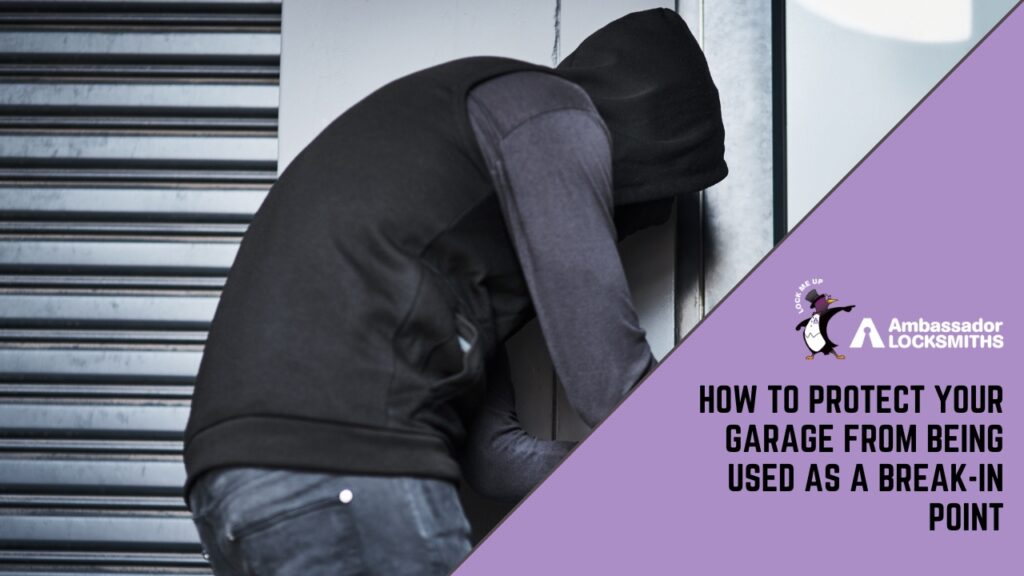
Most homes across Newcastle and Lake Macquarie have a solid front door with a decent deadlock on it, then a garage protected by a motor and a bit of optimism. Burglars know the difference.
Securing a garage properly comes down to four things. Stop the emergency release cord being reached from outside. Fit a real lock on the door between the garage and the house. Lock the garage door itself instead of trusting the opener to hold it shut. And stop leaving remotes and spare keys where they can be found. None of it costs much, and all of it takes longer to keep ignoring than to fix.
What the crime figures do and don’t tell you
There’s no reliable Australian number for how many break-ins happen through the garage. Anyone quoting one to the decimal point has almost certainly borrowed it from overseas.
Here’s why. The Australian Bureau of Statistics counts unlawful entry with intent by premises, and its methodology treats a house, an attached or detached garage and a backyard shed as a single victim when the same people occupy them. The garage never gets counted separately from the house it’s attached to. What the ABS Recorded Crime figures do show for New South Wales is still worth knowing.
In 2024 there were 32,913 victims of unlawful entry with intent across the state, down 3 per cent on the year before, and 72 per cent of those happened at a residential location. Break-ins aren’t climbing in NSW.
Vehicle theft is the different story. It rose 6 per cent to 12,319 vehicles, and 55 per cent of those were taken from an outbuilding or residential land, the category covering driveways, carports and garages. The thing increasingly being taken from around the house is the car, and the car lives in the garage.
The emergency release cord is the weak point
Every sectional or panel lift door with an automatic opener has a release cord hanging from the trolley on the ceiling track. It disconnects the door from the motor so you can lift it by hand when the power’s out. It’s also the most reliably exploited weakness on any garage.
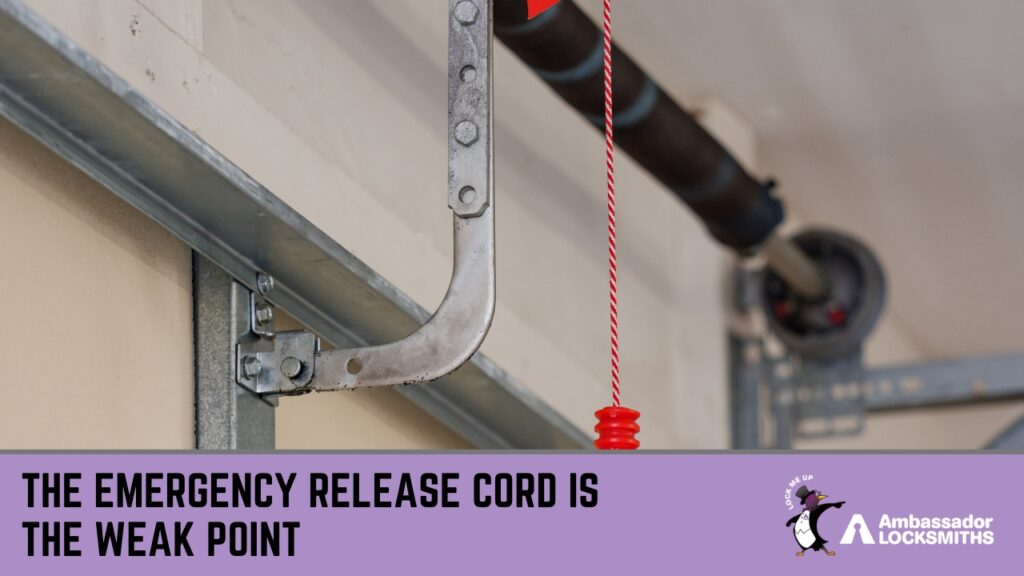
The method is old and well known. Push the top panel inwards to open up a gap, feed a hooked length of wire through, catch the cord and pull. The motor lets go, the door lifts by hand, and there’s almost no sign of forced entry afterwards.
The advice you’ll find most often online is to zip-tie the release lever so it can’t be pulled. Don’t do that as a permanent fix. That cord is your way out if the power fails, and around the Hunter it fails often enough in storm season to matter. Disabling it to stop a break-in you might never have, at the cost of being stuck in a fire you might, is a poor trade.
Better options:
- Shorten the cord so the handle sits well above the top of the door, out of reach of a wire
- Fit a purpose-made shield over the release mechanism, which blocks a hook but still lets you pull the cord from inside
- Replace a worn or missing top weather seal, so there’s no gap to feed wire through in the first place
- Cover or frost any windows in the top panel, because they show someone exactly where the cord sits
The door between the garage and the house
Once someone’s inside the garage, they’re out of sight, out of the weather and behind a closed door. They can take as long as they like on the next one. That next one is usually the worst door on the property.
NSW Police put it plainly in their home security advice: internal garage doors should be locked or deadlocked. Most aren’t. Builders treat that opening as internal, so it gets a hollow core door and a passage set or privacy latch, the same hardware you’d put on a bedroom. It’s a door you could put a shoulder through.
Treat it as an external door, because that’s what it is. A solid core door, a keyed deadlock and a proper strike plate. The lock is rarely the part that gives way on these doors. The strike plate is, because it’s held on by short screws that only bite into soft jamb lining. Long screws reaching the stud behind the frame make more difference than upgrading the lock does. Our page on deadlocks and window locks covers the hardware side.
If you’re replacing the door itself rather than the hardware, check with your builder or locksmith first, as that opening can carry specific requirements depending on how the house was built.
Your remote is a key, so treat it like one
A garage remote opens your house. Nobody would leave a house key in an unlocked car in the driveway, and yet the remote gets clipped to the sun visor and forgotten about.
If the car sits outside overnight, the remote shouldn’t be in it. Move it onto your keyring, or fit an external keypad so there’s nothing worth stealing. The same goes for registration papers in the glovebox, which conveniently pair that remote with an address.
Opener age matters too. Older units send the same fixed code every time, which can be captured and replayed later. Rolling code openers change the code with every press and have been standard for a long time now. If your opener is old enough to be fixed code, it’s old enough to be replaced on reliability grounds anyway.
What’s in the garage helps them into the house
NSW Police also recommend locking away garden tools, equipment and ladders so they can’t be used to get into your home. That’s the part people miss. A garage is a room full of things designed to open other things.
The ladder that reaches the upstairs window. The crowbar. The angle grinder that goes through a padlock in about a minute. Leave someone alone in a well-stocked garage and you’ve handed them the tools for the rest of the job.
Worth sorting:
- Spare house and car keys hanging on a hook by the door, visible through the window
- Ladders left loose against a wall rather than chained to a fixed point
- Power tools in an open rack instead of a lockable cabinet
- The garden shed, which usually has weaker locks again and sits out of sight of the street. We’ve written separately on securing your shed.
Roller and tilt doors around Lake Macquarie
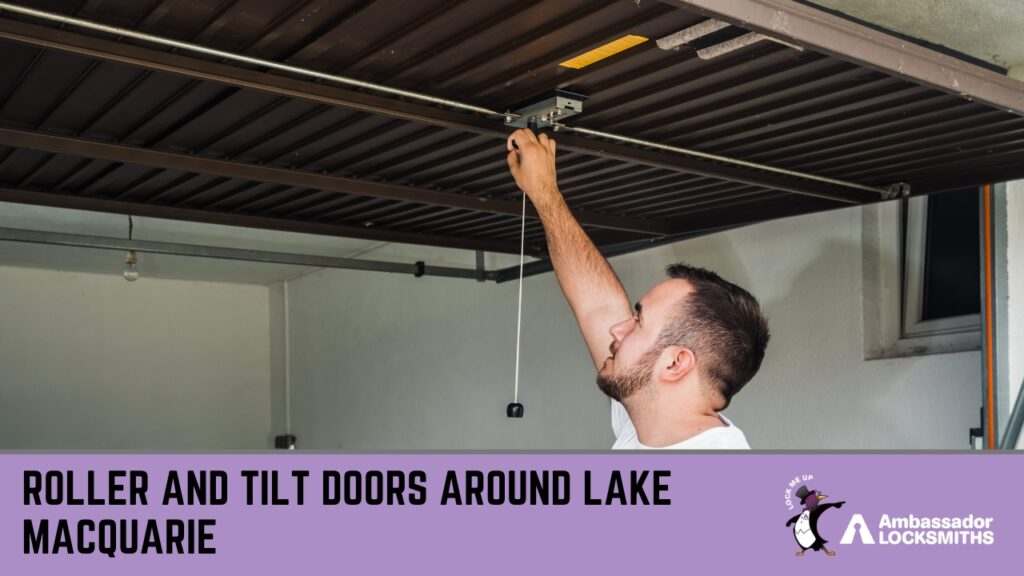
Not every garage has a motor. Plenty of homes across the area still run a manual roller or tilt door, and they fail in their own ways.
Roller doors can be levered up at a bottom corner if the curtain has any slack in it. Slide bolts through the guides on both sides fix that cheaply, and NSW Police suggest much the same, noting roller, tilt and panel lift doors can take additional lock sets such as a hasp and staple or padlocks. Tilt doors usually rely on a single centre handle lock, which is rarely high grade. A bolt at each side does more than replacing that handle.
There’s a coastal problem here too. Homes near the water at Belmont, Swansea, Redhead and Marks Point cop salt air, and garage door locks seize up. A seized lock is a lock nobody uses, and an unused lock isn’t security. A yearly clean and lubricate keeps it turning. If yours has already gone, choosing the right garage door lock is the place to start.
A ten-minute check you can do today
Walk out and look at your garage the way someone else would:
- Stand outside the closed door. Can you see daylight along the top edge, or the release cord through a window?
- Push the top panel gently. Does it flex enough to open a gap?
- Pull the internal door shut and push on it near the latch. Does the frame move?
- Check the strike plate screws on that door. Short ones need replacing.
- Look for spare keys on hooks, and remotes sitting in a car parked outside.
- Turn the key in the garage door lock, if there is one. If it’s stiff or seized, it isn’t protecting anything.
Get the garage sorted properly
Ambassador Locksmiths has been working on Newcastle and Lake Macquarie homes since 2000, and garage doors, sheds and roller doors are part of what we do every week. If the internal door needs a deadlock, the roller door needs bolts, or a seized lock needs replacing, we can handle the lot in one visit from the van. Have a look at our lock installation, change and repair service, or get in touch on 0407 452 424 or (02) 4942 2202. You can also send us a message and we’ll get back to you.