

Door knobs and door locks are made up of several internal parts that work together to control access and secure your home. Although these components are used every day, many homeowners are unsure what each part does or why certain problems develop over time.
Understanding the parts of your door knob and door lock helps you identify common issues, recognise security weaknesses, and make informed decisions when repairs or replacements are needed.
When a door won’t latch properly or a key becomes difficult to turn, knowing how these parts function makes the cause easier to pinpoint.
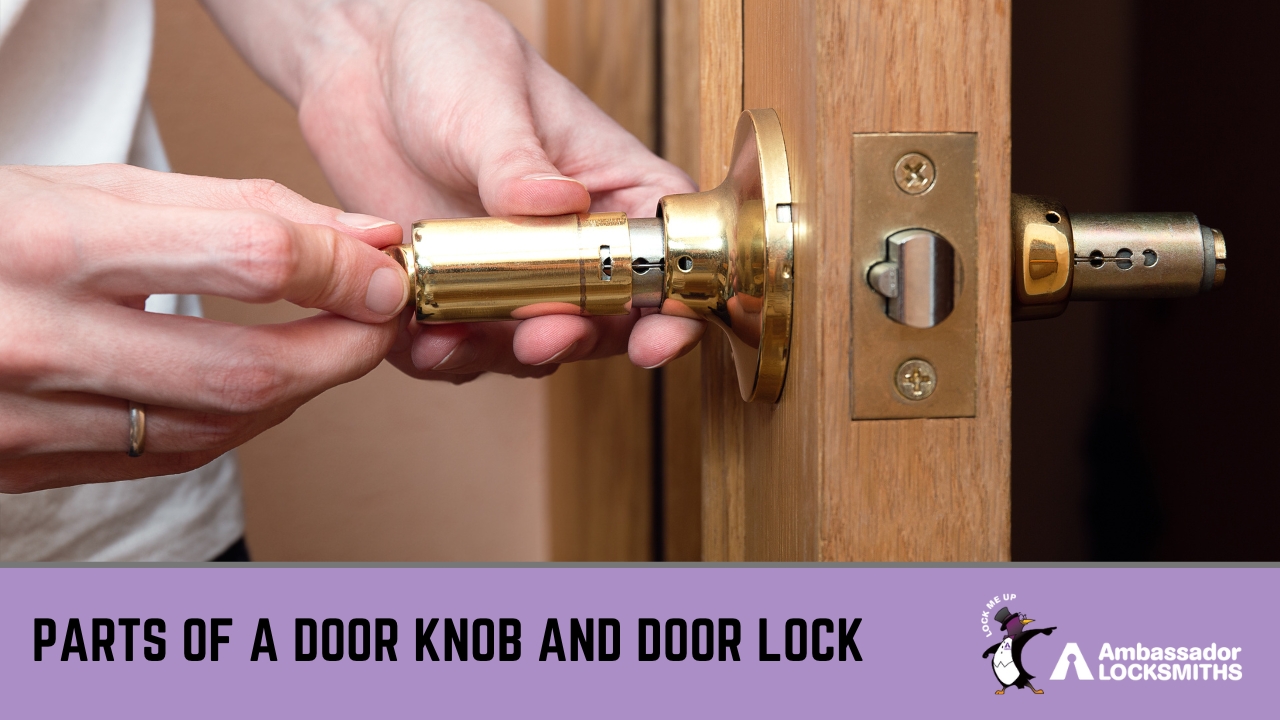
Parts of a Door Knob and Door Lock
A door knob and door lock function as a connected system. The knob allows the door to open by retracting the latch, while the lock restricts access by preventing movement without authorisation. Although designs and finishes vary, most residential doors rely on the same core internal components.
On exterior doors, these parts play a particularly important role because they form the first barrier against forced entry. Understanding how the main components interact helps homeowners assess problems early and choose suitable door knob and locking hardware when upgrades or replacements are required.
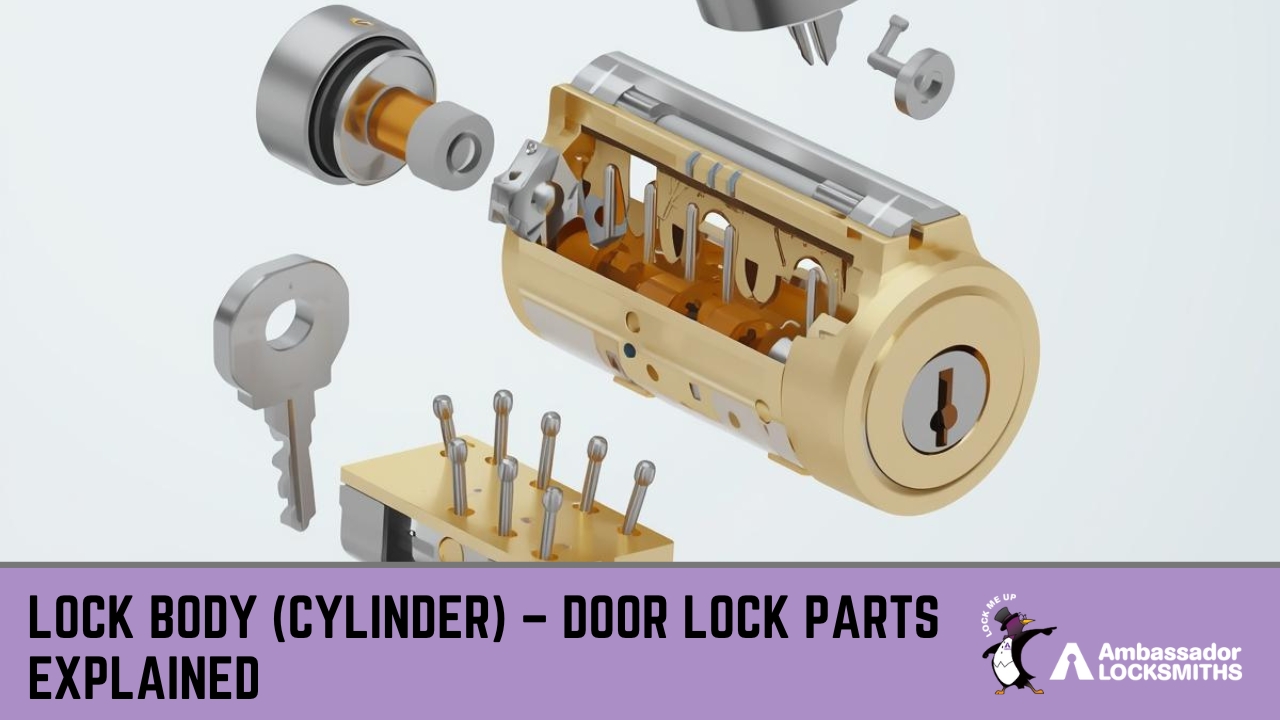
Lock Body (Cylinder) – Door Lock Parts Explained
The lock body, often called the cylinder, is the part of the lock where the key is inserted. Inside the cylinder are small pins that must align correctly before the lock can turn. When the correct key is used, the pins line up and allow the locking mechanism to operate.
Cylinders vary in durability and resistance to tampering. Over time, wear can cause keys to stick or fail to turn smoothly. Because the cylinder controls access, it is often the first component addressed when improving door security or resolving reliability issues.
Bolt and Latch – Different Parts of a Door Lock
The bolt, also known as the latch, is the metal component that extends from the door into the frame to keep it closed. Without this part, the door would not stay shut securely. Most homes use either a spring bolt or a deadbolt.
Spring bolts retract automatically when the knob is turned, making them convenient for everyday use. Deadbolts must be locked manually but provide stronger resistance to forced entry. For this reason, deadbolts are commonly used on exterior doors where security is more important than convenience.
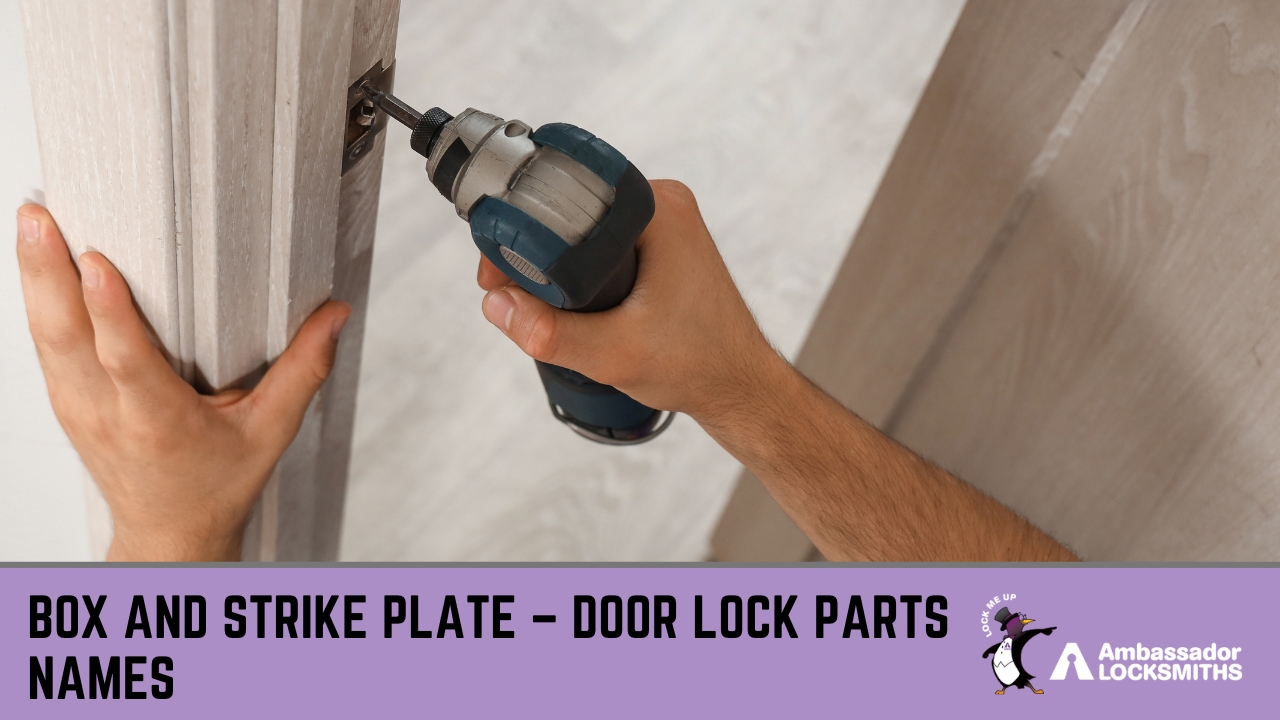
Box and Strike Plate – Door Lock Parts Names
The box and strike plate are fitted to the door frame and support the locking system. The box provides space for the bolt to extend fully, while the strike plate reinforces the area where the bolt meets the frame.
These parts are often overlooked, but they have a significant impact on door strength. A weak or poorly installed strike plate can reduce the effectiveness of even a high-quality lock. Proper alignment and reinforcement help distribute force and improve overall door security.
Parts of a Door Knob
A door knob contains several internal components that work together to operate the latch. While knobs come in many styles and finishes, their internal construction is generally similar.
Because door knobs are used frequently, wear and tear is common over time. Issues such as looseness, stiffness, or difficulty opening the door often indicate worn internal parts. When these problems persist, upgrading to modern door knobs and handle sets can restore smooth operation and improve reliability.
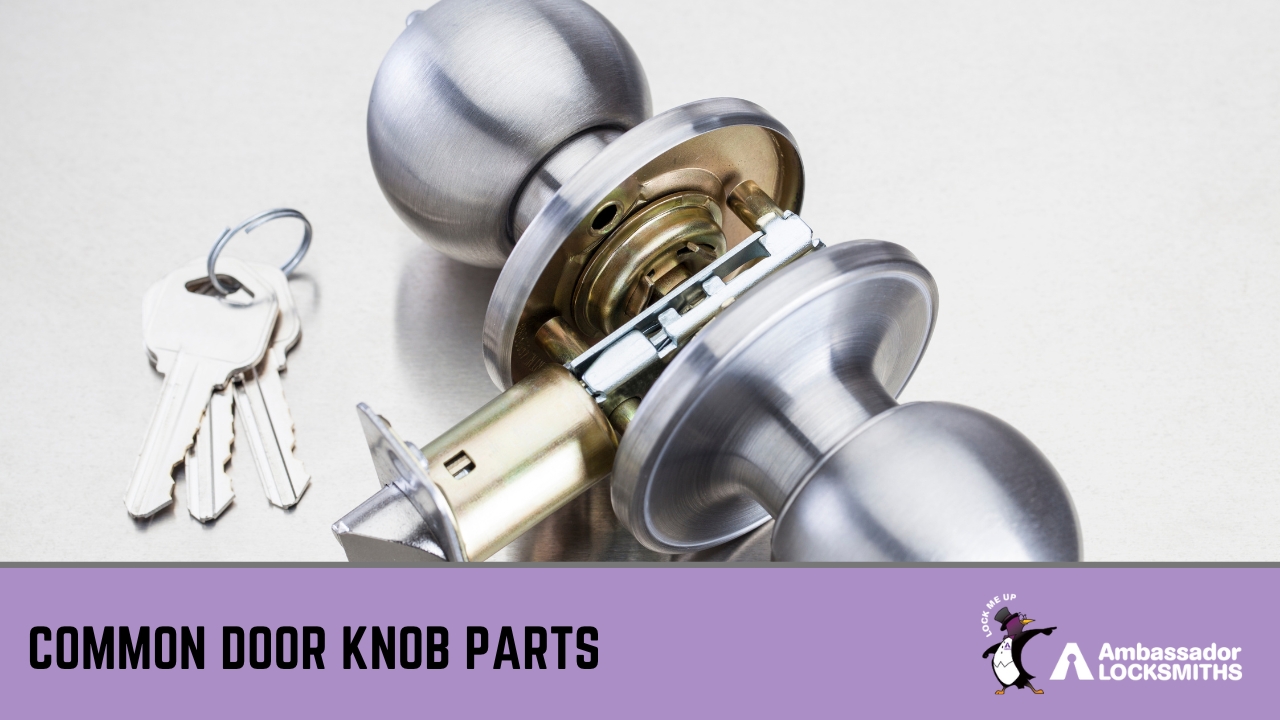
Common Door Knob Parts
Most door knobs include the same essential internal elements. These parts work together to allow the knob to turn and retract the latch.
Key components include the knob or handle itself, a spindle that connects both sides, a latch mechanism that holds the door closed, and a rose or escutcheon plate that covers the mounting hardware. Keyed knobs also contain a lock cylinder to control access. When one of these parts fails, the entire knob may stop functioning correctly.
Frequently Asked Questions
What are the parts of a door lock called?
Door locks generally consist of a cylinder, bolt or latch, strike plate, and internal mechanisms that connect these components. Each part contributes to both security and smooth operation.
What are the main parts of a door knob?
The main parts of a door knob include the handle, spindle, latch mechanism, mounting plate, and a cylinder in keyed versions. These parts allow controlled access and reliable door operation.
What is the difference between a spring bolt and a deadbolt?
Spring bolts lock automatically and are convenient for daily use. Deadbolts require manual locking and provide stronger resistance to forced entry, making them better suited to exterior doors.
Are door knob locks secure enough for exterior doors?
Door knob locks provide basic security but are usually paired with a deadbolt to improve protection on exterior doors.
Call Ambassador Locksmiths for Your Door Knob and Door Lock Needs in Newcastle
Ambassador Locksmiths is available 24 hours a day, 7 days a week to assist with all door knob and door lock requirements. Whether you’re dealing with an emergency lockout, need key changes, or want help installing, repairing, or upgrading locks, our experienced team is ready to help.
We work with a wide range of solutions, from traditional mechanical locks to modern electronic keypad systems, providing reliable workmanship and practical advice you can trust.
If you need professional locksmith assistance in the Newcastle area, contact Ambassador Locksmiths today for prompt and dependable service.