
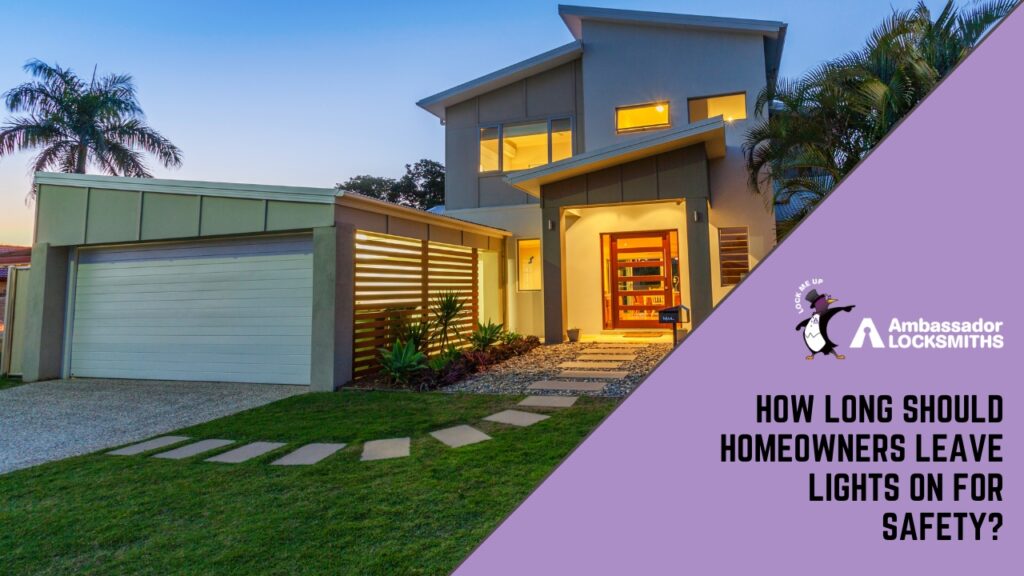
Leaving a light on when you head out makes sense. But leaving the same light on for two weeks while you’re on holidays? That’s one of the things burglars look for.
Lighting is one part of home security, but it only works when it’s used correctly. Here’s what deters opportunistic break-ins and what gives you away.
A Light Left on All Day Signals Nobody Home
Most break-ins happen during daylight hours, but the risk doesn’t disappear at night. What burglars are really looking for is a pattern that suggests an empty house. A light burning in the lounge room at 2pm on a Tuesday, or the same lamp on for five days straight, is a signal rather than a deterrent.
The goal isn’t to have lights on. It’s to make the house look like someone is there.
How to Use Lighting Properly When You’re Away
The most effective approach is varied, timed lighting rather than a single light left running.
Timer switches are cheap and genuinely useful. Set them to turn lights on and off at different times in different rooms. A light coming on in the kitchen at 6pm, shifting to the lounge at 7:30pm, then going off at 10:30pm looks like a person. The same light on from when you left until you get back does not.
Basic plug-in timer switches are available from most hardware stores for under $20 and require no installation. If you want more control, in-wall timer switches can be wired to replace a standard light switch and set on a weekly schedule so the pattern changes across the days you are away.eap and genuinely useful.
Set them to turn lights on and off at different times in different rooms. A light coming on in the kitchen at 6pm, shifting to the lounge at 7:30pm, then going off at 10:30pm looks like a person. The same light on from when you left until you get back does not.
Motion-activated exterior lights work differently. They’re not about mimicking occupancy. They’re about removing the cover of darkness if someone approaches. A light that suddenly floods the front yard when someone walks up the driveway is a strong deterrent, because it removes one of the main advantages a burglar is counting on.
Smart lighting systems let you control lights from your phone while you are away, which takes the guesswork out of it. Some systems also allow you to create randomised schedules, so the pattern is never identical from night to night.
Systems like Philips Hue, TP-Link Kasa, and similar smart bulb ranges work with standard fittings and do not require an electrician to install. If you already have a home Wi-Fi network, setup is straightforward.t of it. Some systems also allow you to create randomised schedules, so the pattern is never identical from night to night.
What Lighting Won’t Do
Lighting helps, but it has limits.
A light on inside doesn’t secure your door. It doesn’t stop someone who has already decided to try the handle or test a window. And it won’t help at all if the actual entry points on your home aren’t up to scratch.
Most break-ins in residential areas don’t involve sophisticated methods. Doors with worn or low-grade locks, windows that don’t latch properly, and side gates that can be lifted off are far more common entry points than anything dramatic. Lighting might make a burglar think twice before approaching, but a compromised lock or a door that doesn’t sit flush in its frame is what lets them in.
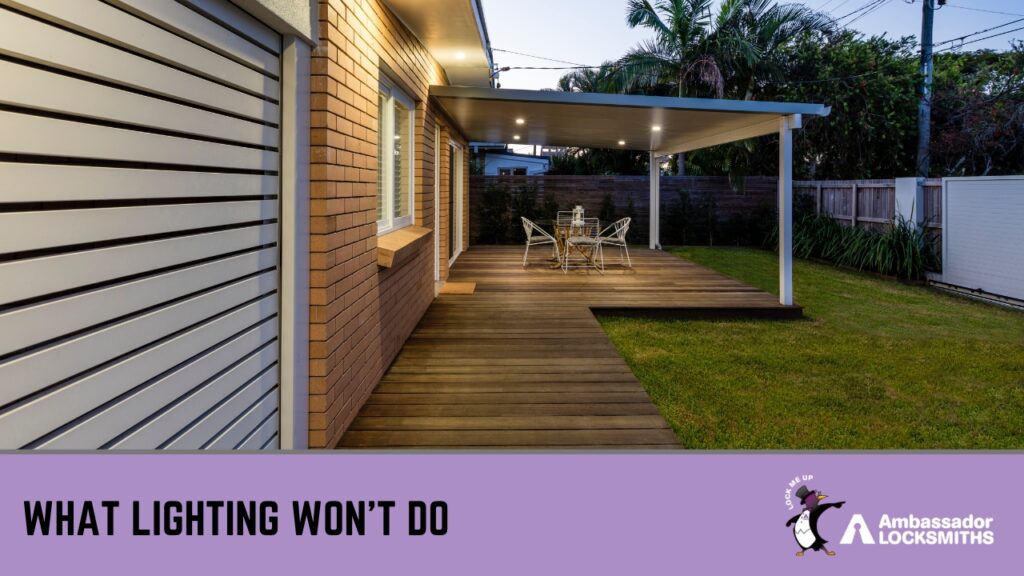
Before You Leave, Check the Hardware
Before You Leave, Check the Hardware
If you are heading away, the most useful thing you can do is walk around your property and check the basics. Here is what to look at.
Deadlocks on front and back doors: These should engage cleanly and sit flush in the frame when locked. If the lock feels stiff, loose, or requires lifting the door handle to turn the key, it needs attention. An old deadlock that is not functioning properly offers far less resistance than one in good working order.
Window locks: Louvre and sliding windows in particular are commonly overlooked. If a window can be opened from outside with moderate force regardless of whether it is locked, the lock is not doing its job.
Side gates and garage doors: Side gates that can be lifted off their hinges, or that close with a simple latch rather than a keyed lock, are a straightforward entry point for anyone who has decided the property looks worth trying. A garage door that connects to the interior of the house needs the same level of attention as a front door.
Key control: If you have lost track of who has copies of your keys, getting the locks rekeyed before you leave is the simplest fix. Rekeying is quicker and cheaper than replacing the whole lock, and it means old keys no longer work regardless of where they ended up.
If your locks are old, worn, or you are not confident about any of the above, it is worth having a locksmith assess them before you go rather than after.
If you are not sure what you have got or whether it is adequate, Ambassador Locksmiths can do a security check and tell you plainly what is holding up and what is not.
Our installation and rekeying services cover deadlock upgrades, window lock installations, and rekeying after a key loss.
We are based in Charlestown and service Newcastle and Lake Macquarie. If you are heading away and want to know your home is properly secured before you leave, contact Ambassador Locksmiths and we will sort it out
The Short Answer
Use timed or smart lighting to vary the pattern. Motion-activated exterior lights add another layer. But lighting is a signal, not a lock. The physical security of your doors and windows is what keeps people out.
If you haven’t looked at your locks in a while, now’s a good time.