
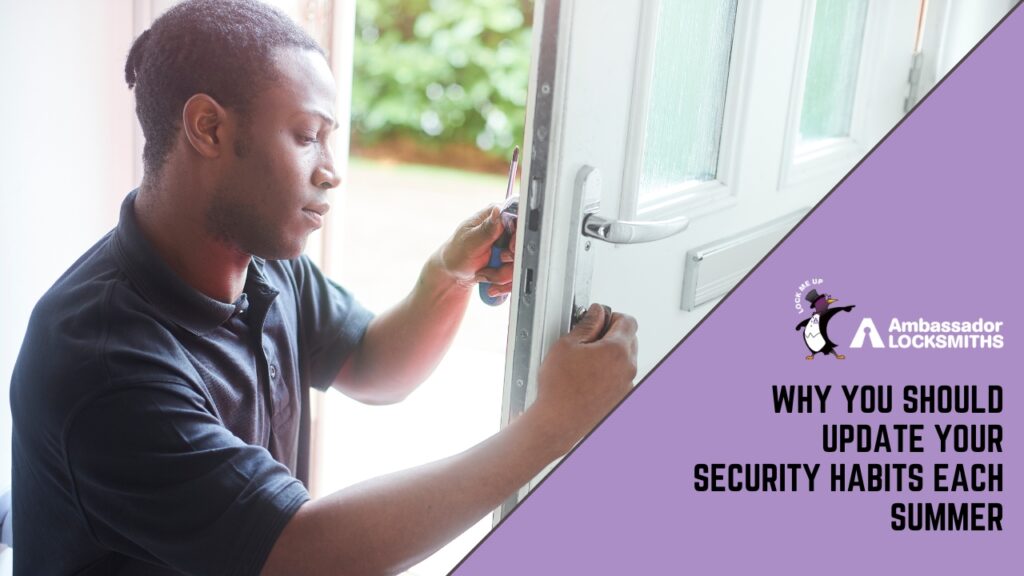
Summer is worth a security review, but not for the reason most people think. Break-ins don’t spike over the Christmas holidays in NSW. What changes is you. Doors sit open for the breeze, the house is empty for two weeks, a spare key goes to a neighbour, and the bins stay out while you’re at the coast. The lock on your back door doesn’t change in December. How you use it does.
This guide covers what shifts around a Newcastle or Lake Macquarie home over summer, which locks and hardware to check before the season starts, and what to do before you go away.
Do break-ins actually rise in summer?
Not in NSW, on the published data. Some offences are strongly seasonal, particularly assaults, which rise in summer and fall in winter. Residential break and enter doesn’t follow that pattern. BOCSAR’s executive director Jackie Fitzgerald made the point directly in September 2026 when the latest burglary hotspot data was released: the regular summer spikes seen in violent offending don’t show up in break and enter.
The longer trend is downward. Over the ten years to June 2026, property crime fell substantially across NSW. In Greater Sydney, break and enter dwelling fell 5.8 per cent over the two years to June 2026, and across the state the offence showed no significant change.
So why bother reviewing security in November? Because a burglary doesn’t need a seasonal crime wave to happen to you. Risk is about opportunity, and summer is when households hand out more of it: unlocked doors, empty houses, visible absence. Every year we get called out in January to homes where nothing was forced, because nothing needed to be.
What changes about your home over summer?
Six things, and all of them are habits rather than hardware.
Doors and windows stay open. Through a Newcastle summer the back slider is open most of the day and bedroom windows stay open overnight. A flyscreen is not a lock. Neither is a security screen that’s latched but not keyed.
The house is empty for longer. A fortnight away is very different from eight hours at work. Mail builds up, the lawn grows, the bins stay out, and nobody collects the parcel on the porch.
More people hold keys. House sitters, the neighbour watering plants, family staying over, the kids home from school with their own key. Every copy is a copy you don’t control.
You’re outside and distracted. Front door unlocked while you’re in the backyard, garage open while you’re washing the car, keys left in the back of the door.
Tradies and deliveries increase. Pool work, air conditioning installs, pre-Christmas deliveries. More people have a reason to be at your house, and more people see what’s inside the garage.
Holiday plans go public. Posting the airport photo tells a wider audience than you think, and so does an out-of-office that says you’re back on 15 January.
Which locks should you check before summer?
Walk the house once in November with a screwdriver and ten minutes. Most of what you find is a five minute fix, and the rest is worth booking in before the Christmas rush.
Entry doors. You want a deadlock, not just a latch. Turn the key and check the bolt throws fully into the strike plate. If you have to lift or lean on the door to lock it, the door has dropped and the lock will fail sooner rather than later.
Sliding doors. The weak point in most Newcastle homes. A standard slider lock holds the door closed, it doesn’t stop the panel being lifted out of its track. Check the track for play, and add a keyed patio bolt or a track block if there’s none.
Windows. Key locks on anything reachable from the ground, a fence, a carport roof or a verandah. Then check if you can find the keys. A window lock nobody can unlock becomes a window nobody locks.
Security and screen doors. The screen door lock needs to key separately from the main door, so you can leave the main door open for air with the screen genuinely locked.
Garage and side gates. The internal garage door into the house is often the weakest lock on the property. Padlocks on side gates rust out fast near the coast, so check the shackle turns freely before it seizes in January.
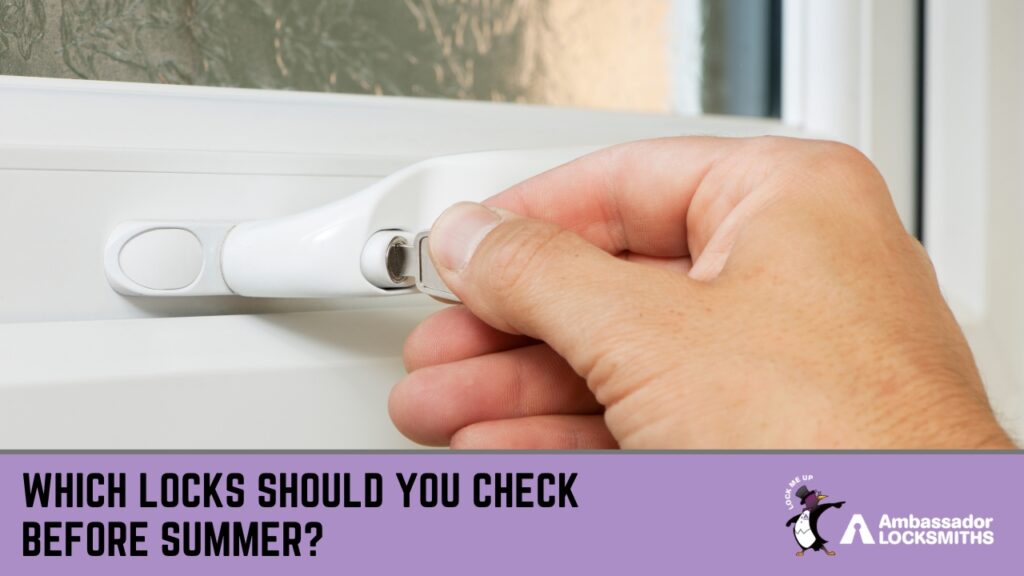
Keys. If you’ve had a tenant change, a renovation, a break-up or a lost set since last summer, re-key the locks. It costs a fraction of replacing hardware and it cancels every copy out there.
Salt air is the quiet one in this region. Locks within a few kilometres of the lake or the ocean seize and corrode faster than inland ones. A key that’s getting stiff is telling you the cylinder is on its way out. A graphite-based lubricant helps, oil and WD-40 make it worse by holding grit.
What should you do before you go away?
The goal is a house that looks occupied and gives nothing away. Work through this the week before you leave, not the morning of.
- Stop the mail or have a neighbour clear the letterbox daily. An overflowing box is the clearest signal there is.
- Put two lights and a radio on timers, set to different times. One lamp on all night fools nobody.
- Mow the lawn before you go, and arrange for it again if you’re away more than a fortnight.
- Ask a neighbour to put your bins out and bring them back in.
- Park a car in the driveway if you can, or ask a neighbour to use it.
- Lock the internal garage door, not just the roller door.
- Take photos of valuables and record serial numbers. It takes 15 minutes and it’s what your insurer and the police will ask for.
- Put jewellery, passports and documents in a safe or out of the house.
- Give one person a key, and give it to them in person. Don’t leave it under the mat, in the meter box or under a pot. Those are the first three places anyone looks.
- Tell one trusted neighbour the dates, who’ll be coming by, and what car they drive.
- Post the holiday photos when you’re home, not from the departure lounge.
- Check every window and door on the way out, including the laundry and the bathroom.
What else actually deters someone?
Locks buy time. Everything below removes the reason to try your house instead of the next one.
Sight lines. Trim the hedge along the front fence and the shrubs under the windows. Anything that screens a window from the street is working for the wrong side.
Lighting. Sensor lights on the side access, the back door and the garage. Opportunists avoid being lit up.
Noise. A dog, or a doorbell camera that chimes inside. Being noticed is what people avoid.
Neighbours. The cheapest security on the street. A neighbour who knows you’re away and knows what your car looks like beats any device.
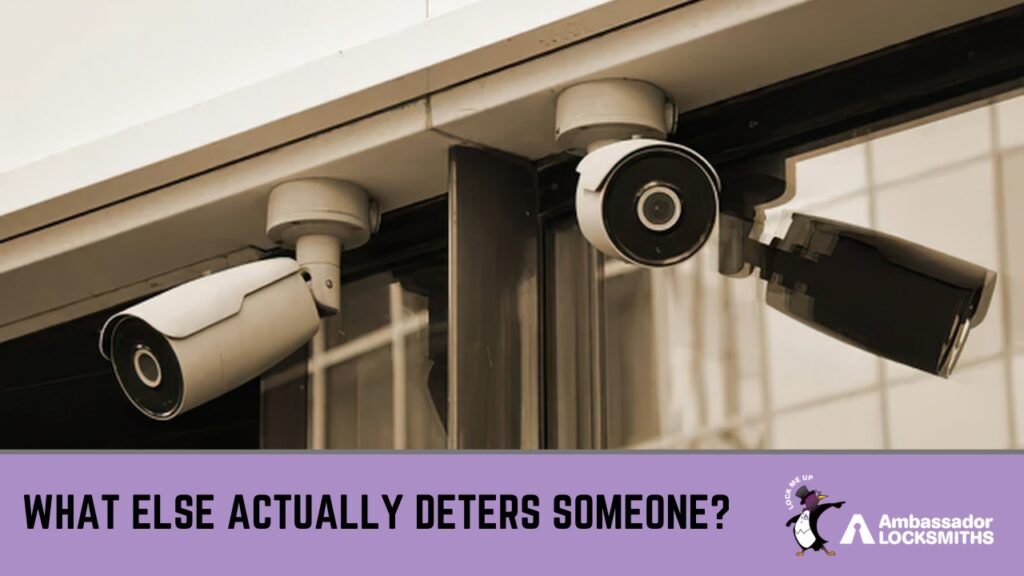
Cameras. Useful for identification afterwards and for knowing when a parcel landed. Less useful as a deterrent than people assume, because a hoodie beats a camera. Worth having, not worth relying on.
The garage and shed. Bikes, tools, the boat, the trailer. For a lot of homes this is where the money sits, and it’s usually secured with the lock that came with the shed.
Check what your insurance actually requires
This is the part people find out about after a claim. Home and contents policies set conditions on how the home is secured, and those conditions differ between insurers. Common ones include deadlocks on external doors, key locks on accessible windows, and a limit on how long the home can be left unoccupied before cover changes, often somewhere between 30 and 90 days.
Three things worth doing before summer:
- Read the security and unoccupancy sections of your product disclosure statement, not the summary.
- Check whether your locks meet what the policy describes, and get it fixed if they don’t.
- Keep receipts for any security work. They’re evidence of compliance if you ever need it.
If you’re housesitting, lending the place to family, or putting it on a short stay platform over the holidays, check how that affects your cover. Renting the house out changes the picture for most policies.
This is general information only. Your own policy wording decides what applies, so check it or talk to your insurer.
Your summer security checklist
One pass through the house, once a year. Print it or work through it on your phone.
- Every external door has a working deadlock, and the bolt throws fully
- Sliding doors have a keyed bolt or track block, and no lift in the track
- Accessible windows have key locks, and you know where the keys are
- Screen and security doors lock separately from the main door
- Internal garage door is keyed and gets locked
- Side gate padlock turns freely and isn’t corroded
- Locks re-keyed if keys have been lost or handed over since last summer
- Stiff or sticking locks serviced before they fail
- Sensor lights working on side access and the back of the house
- Shrubs trimmed back from windows and the front fence
- Shed and garage contents secured, not just the door
- Valuables photographed and serial numbers recorded
- Safe in use for documents and jewellery
- Insurance security conditions checked against what you have
- One neighbour briefed on your dates
- Mail, bins and lawn arranged for any trip over a week
Frequently asked questions
Is it cheaper to re-key locks or replace them?
Re-keying is usually cheaper, because the hardware stays and only the pins inside the cylinder change. Replacement makes sense when the lock is worn, corroded, or isn’t a deadlock to begin with. A locksmith can tell you which applies in a single visit.
Can I leave a key hidden outside for family over the holidays?
No. Under the mat, in the meter box, under a pot or on the door frame are all checked first. If people need access, use a keyed lock box mounted out of sight, or give the key to one person directly.
Do I need a deadlock on every door?
On every external door, yes. Many insurers expect it, and a latch alone can be slipped. Internal doors don’t need them, with the exception of the door from the garage into the house, which is an external door in practice.
How often should locks be serviced?
Once a year is enough for most homes, more often near the coast. Salt air corrodes cylinders and springs. If a key is sticking, grinding or needs jiggling, the lock is already failing and will leave you outside at the worst moment.
What do I do if I’ve lost keys while away?
Call a locksmith rather than forcing a window. We run 24 hour emergency lockout entry across Newcastle and Lake Macquarie. If a set is genuinely lost rather than misplaced, re-key afterwards.