
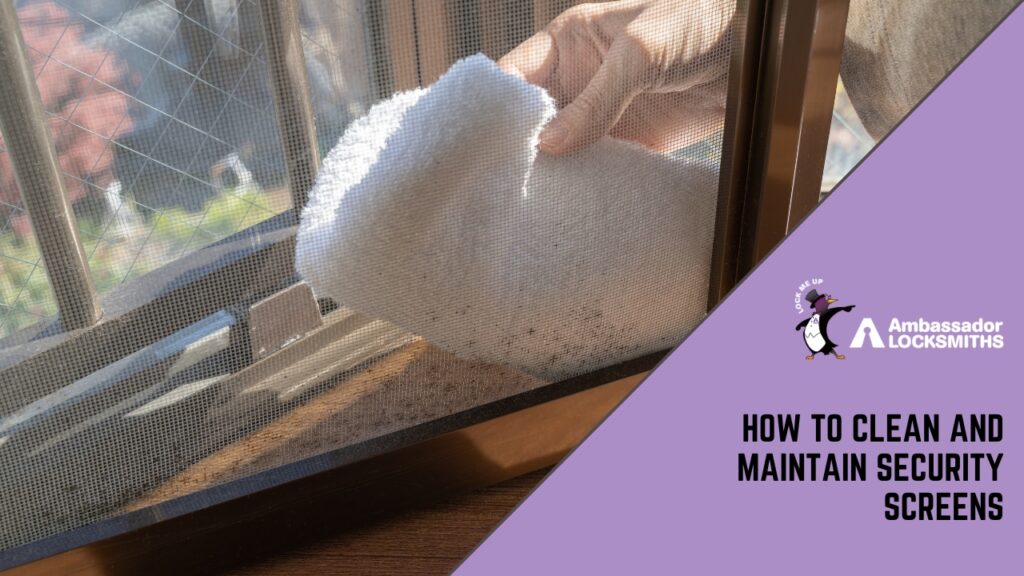
A security screen is a significant investment. A quality door built to AS 5039 standards, properly installed, should give you 10 to 15 years of reliable service. How long it lasts comes down largely to how well you look after it.
Neglected screens corrode at the mesh and frame joins, locks seize up from salt and grime, and hinges wear unevenly. None of that is hard to prevent. It just requires cleaning a couple of times a year and keeping an eye on a few specific things.
Here is a straightforward guide covering mesh cleaning, frame and hardware maintenance, and what to watch for before minor issues become bigger ones.
Cleaning the mesh
Most security screens use either stainless steel or aluminium mesh. The two materials are common across Newcastle and Lake Macquarie homes and each handles differently under coastal and suburban conditions.
Stainless steel mesh
Stainless steel mesh is the tougher option for coastal areas. It resists corrosion well but is not immune to it. Salt air accelerates surface oxidation on stainless if the mesh is not cleaned regularly, particularly within a few kilometres of the water.
To clean stainless mesh, mix warm water with a small amount of mild dish soap. Use a soft brush, not a wire brush or anything abrasive, and work the solution into the mesh with gentle circular strokes. Rinse thoroughly with fresh water and let it dry fully before closing the door. Leaving soap residue on stainless accelerates surface pitting over time.
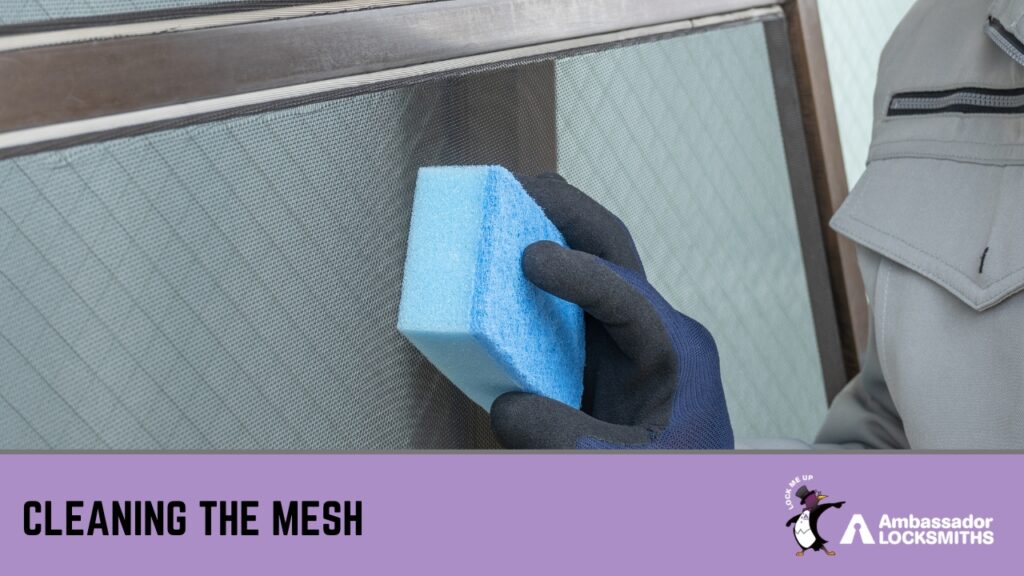
For coastal properties, we recommend doing this every three months. Inland, twice a year is enough for most households.
Aluminium mesh and perforated panels
Aluminium is lighter and more affordable than stainless but more vulnerable to pitting in salty environments. The same warm soapy water and soft brush approach applies. Avoid anything acidic, including vinegar-based cleaners that are popular for general household cleaning. Acid strips the surface coating from aluminium and speeds up corrosion.
After washing aluminium mesh, a light wipe with a product like WD-40 or a dedicated aluminium protectant helps slow oxidation, particularly in exposed locations. Apply sparingly and wipe off any excess.
What not to use on security mesh
- Wire brushes or steel wool. These scratch the mesh surface and introduce microscopic damage that rusts.
- Bleach. Damages the mesh weave and degrades rubber seals in the frame.
- Pressure washers. The force can bend or push stainless mesh out of the frame channel, particularly on older doors.
- Acid-based cleaners. Strips protective coatings on aluminium frames and mesh.
Maintaining the frame
The frame is where most of the structural integrity of the door sits. Aluminium and steel frames are generally powder coated, which gives them good protection against surface corrosion, but the coating can chip or wear at corners and hinge points over time.
Wipe down the frame with a damp cloth and mild detergent as part of your regular clean. Pay particular attention to the bottom rail, which collects water and grime, and the corners where the mesh meets the frame channel. These spots are the first to show corrosion if they are not kept clean.
If you notice the powder coat chipping around hinges or lock cutouts, touch it up with a small amount of matching paint. Left untreated, bare metal in those spots will oxidise and spread under the surrounding coating.
Check the rubber gasket that runs around the inside of the frame where the mesh is retained. If it is cracked or pulling away, it is worth replacing. A loose gasket lets moisture sit between the mesh and frame, which is where corrosion usually starts.
Hinges
Hinges take a lot of movement. A heavy security screen door swings on them thousands of times a year. Without lubrication, the pins wear, the door starts to sag, and eventually the bolt on your lock no longer lines up cleanly with the strike plate.
Lubricate hinges once or twice a year with a dry lubricant or silicone spray. Avoid oil-based lubricants like WD-40 on hinges. They attract dust and grit, which acts as an abrasive and accelerates wear rather than reducing it. A dry lubricant or lithium grease is the better choice for any moving part that is exposed to dust and outdoor conditions.
If the door has started to drag or no longer closes flush, check the hinge screws before assuming the door is warped. Loose hinge screws are a very common cause of a sagging screen door and can usually be fixed in under five minutes.
Lock maintenance
The lock is the most important functional component of the door. A security screen door with a seized or stiff lock is a security risk and a daily frustration. Security screen locks are built to handle outdoor exposure, but they still need basic care.
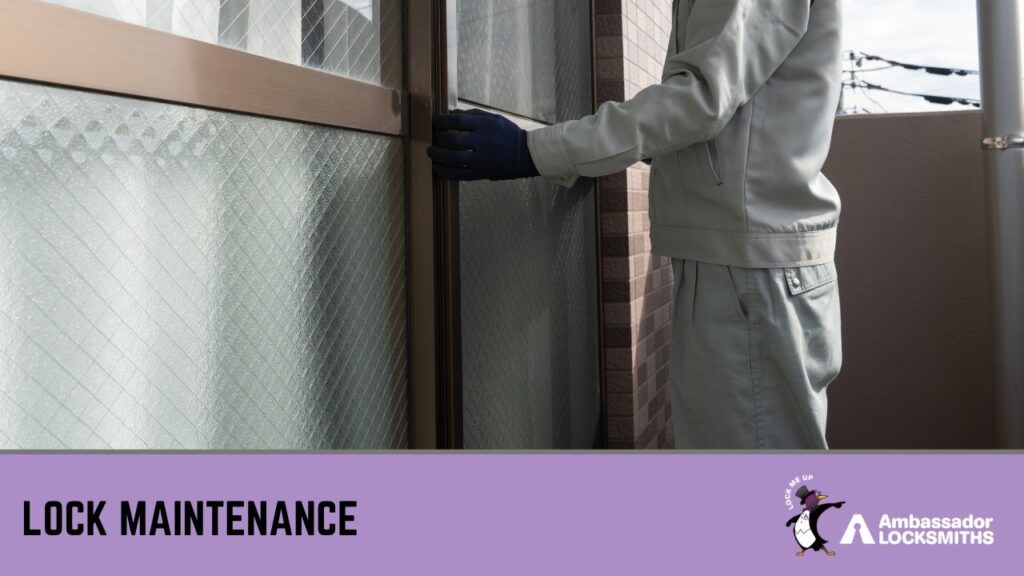
Apply a graphite lubricant or Teflon-based spray to the lock cylinder once or twice a year. Insert the key and work it in and out several times after applying to distribute the lubricant through the pins. Do not use oil on cylinders. It gums up the pin stacks over time and makes the problem worse.
Check the bolt travel. The bolt should extend and retract cleanly with no sticking. If it is stiff, the cause is usually one of three things: a dry cylinder, a strike plate that has shifted, or hinge wear causing the door to sit slightly out of alignment. The first two are easy to fix yourself. If the door alignment is the issue, it is worth having a locksmith check the door before forcing the lock repeatedly and wearing out the bolt mechanism.
For digital and smart screen door locks, wipe the keypad face with a dry microfibre cloth to keep the contacts clean. Check the battery level every six months. Most smart locks give a low-battery warning, but do not wait for the alert before replacing them.
What to check each season
A quick visual check twice a year, ideally at the start of summer and again going into winter, catches most issues before they develop into something expensive.
- Mesh: look for any bulging, separation from the frame channel, or visible rust spots beginning to form.
- Frame corners: check for corrosion starting at the joins, particularly at the bottom two corners.
- Rubber gasket: confirm it is seated correctly around the full perimeter of the frame.
- Hinges: check for any wobble, squeaking, or visible corrosion on the pin.
- Lock bolt: confirm it extends and retracts cleanly and engages the strike plate without lifting or dragging.
- Strike plate: check that it is still firmly fixed and has not shifted with frame movement.
When to call a locksmith
Some things are worth sorting yourself with a brush, a cloth, and some lubricant. Others are worth getting a professional to look at.
If the lock is stiff and lubricant has not fixed it, do not keep forcing it. A lock that is binding due to door misalignment will wear out faster the more it is used in that state. A locksmith can adjust the strike plate, check the hinge alignment, and restore clean bolt travel without replacing the lock.
If the mesh has pulled away from the frame channel at any point, the screen is no longer meeting its security rating. Mesh that is loose enough to push back into the frame manually has lost its structural integrity. That door needs to be assessed and likely re-meshed or replaced.
If corrosion has taken hold at the frame joins and is visible as white or orange deposits spreading under the surface, cleaning will not reverse it. At that point the question is whether the frame can be treated and the affected section stopped, or whether the door has reached the end of its useful life.
Ambassador Locksmiths services Newcastle and Lake Macquarie. Call 0407 452 424 if you need a lock inspected, adjusted, or replaced.