
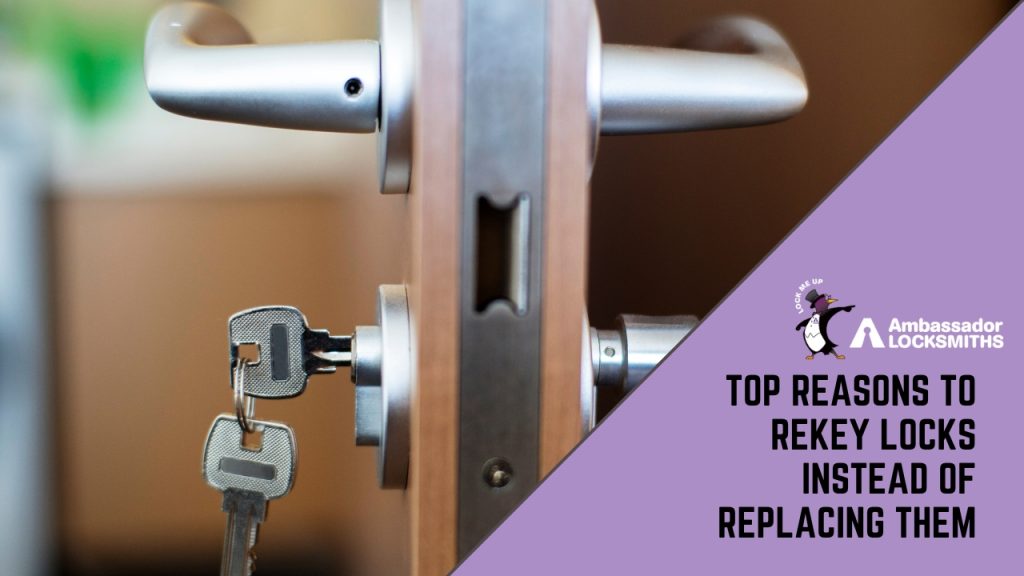
Rekeying a lock changes its internal pins so a new key works while the old hardware stays in place, making every previous key useless. In most situations it is faster and cheaper than full replacement, and it delivers the same security outcome when the lock itself is in good condition.
What Is Rekeying?
A lock contains a set of spring-loaded pins inside the cylinder. A locksmith removes the cylinder, replaces those pins with a new combination, and cuts a matching key. The lock body, the door hardware, and the finish all remain untouched. Because how to rekey a lock to match existing key depends on the specific lock brand and pin configuration, a trained locksmith can typically complete the job in a single visit, often in under an hour for a standard residential lock.
What Is Lock Replacement?
Replacing a lock means removing the existing hardware completely and installing a new lockset. It costs more because you are paying for new components as well as the labour to fit them. Replacement is the right call when a lock is physically damaged, worn, or you want to move to a higher-security or smart-lock system that your current hardware cannot support.
Five Reasons Rekeying Is Often the Smarter Choice
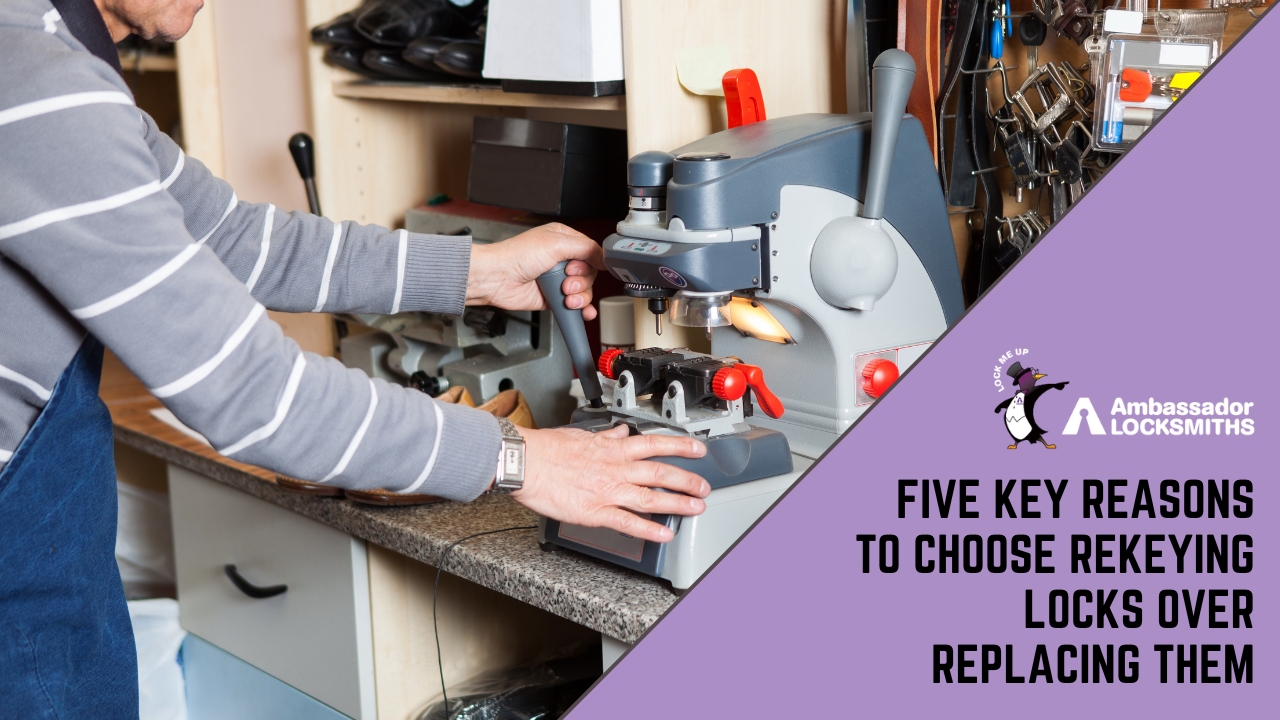
1. Lower Cost
You pay only for the adjustment to the internal mechanism, not for an entirely new lockset. When multiple locks need attention at once, that difference adds up quickly.
2. Faster Service
A standard residential rekey can be completed in a single visit. There is no need to source replacement hardware, remove door furniture, or schedule a follow-up appointment.
3. Keeps the Hardware You Already Have
If your locks are high-quality, well-maintained, or match your door furniture, rekeying preserves all of that. You get improved access control without any visible change to the door.
4. Same Security Level as Replacement
Rekeying renders every previous key useless. Whether you have just moved in, lost a key, or ended a tenancy, the outcome is identical to fitting a new lock in terms of who can and cannot enter.
5. Less Waste
Rekeying keeps the existing lock body out of landfill. When a lock is otherwise sound, there is no practical reason to discard it.
When to Rekey Your Locks
Moving into a new home. Previous owners, real estate agents, and tradespeople may all hold copies of the existing keys. Rekeying immediately after settlement gives you sole control from day one.
Lost or stolen keys. Rekeying is the fastest way to make a missing key useless. You do not need to wait for new hardware to arrive or be fitted.
Ending a tenancy or employment. If a tenant has vacated or a staff member has left, rekeying the relevant locks restricts access without replacing hardware that is still in good condition.
When Replacement Is the Better Option
Damaged or worn locks. A lock that is stiff, corroded, or physically broken cannot be fixed by rekeying. Internal pin adjustment depends on a functioning cylinder and mechanism.
Security upgrades. If you want to move to high-security cylinders, deadbolts with anti-pick features, or smart locks, the existing hardware may not support the upgrade and will need to come out.
Manufacturer incompatibility. Some older or non-standard lock brands have limited pin options, which can restrict how secure a rekey can be. A locksmith can assess whether replacement is worth considering in those cases.
Quick Decision Checklist
Before calling a locksmith, run through these points:
- Is the lock body physically intact with no visible damage? Rekey is likely sufficient.
- Do you need to change who can access the property quickly? Rekeying is faster.
- Are you upgrading to smart locks or high-security cylinders? Plan for replacement.
- Is the mechanism stiff or hard to turn? Have a locksmith inspect before deciding.
- Are multiple locks involved? Rekeying all of them at once is usually more economical than replacing each one.
Rekeying: The Smarter, More Efficient Choice
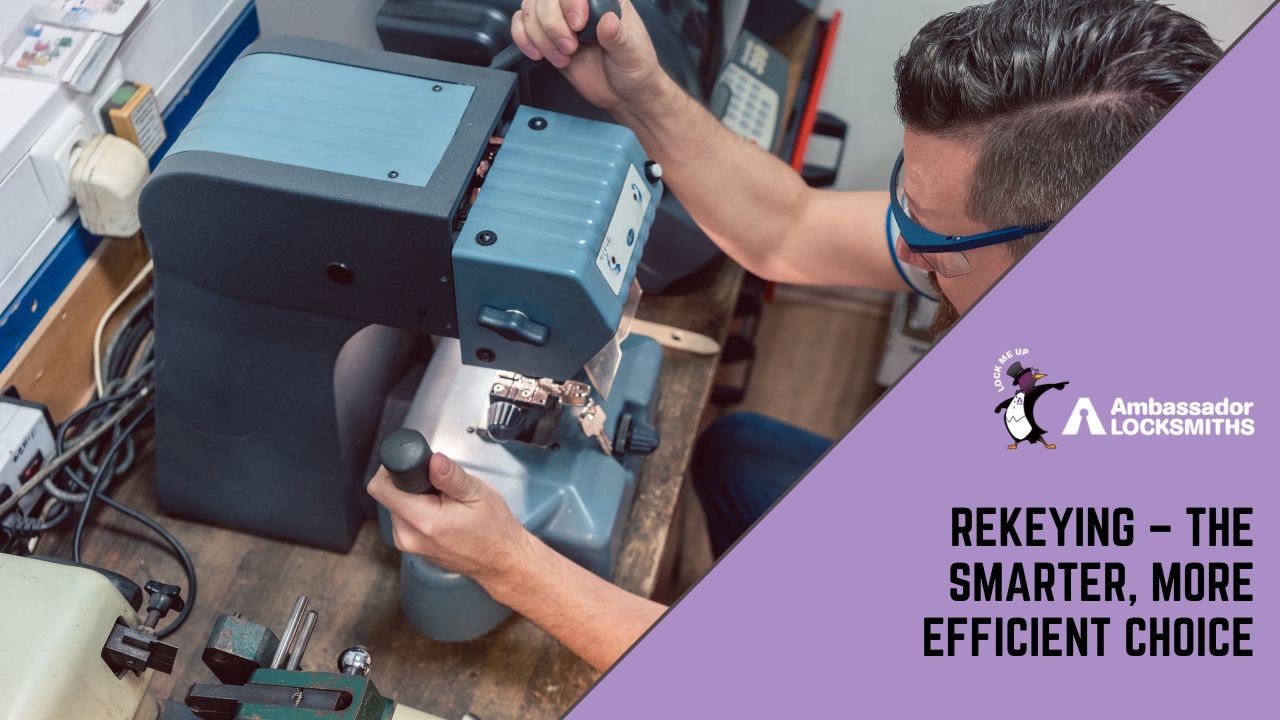
For most homeowners and property managers, rekeying is the practical first choice. It costs less, takes less time, and produces the same security result as replacement when the existing lock is in good working order. Ambassador Locksmiths handles key cutting and re-keying for both residential and commercial properties, including single and double block locks.
If you are unsure which option suits your situation, the team at Ambassador Locksmiths can assess your locks and recommend the most cost-effective path. Call 0407 452 424 or send an enquiry through the online contact form.
Frequently Asked Questions About Rekeying Locks
What is rekeying a lock?
Rekeying changes the internal pins and springs inside the lock cylinder so it works with a new key while the existing hardware stays in place. The old keys become useless without any change to the lock body itself.
Is it cheaper to rekey or replace locks?
Rekeying is usually cheaper because you pay only to adjust the internal mechanism rather than buying and installing an entirely new lockset. The saving is more noticeable when several locks need to be updated at the same time.
Should I rekey or replace locks when moving into a new home?
Rekeying is usually enough to stop previous owners’ keys from working and is the fastest way to take control of your property’s access on settlement day. Replace instead if the locks are damaged, worn, or you want to move to higher-security or smart-lock hardware that your current locks cannot accommodate.