

Many sheds in Australia are built with light materials and basic locks that offer little resistance to forced entry. Thieves target them because they are easy to access and often hidden from street view. Power tools, bikes, and garden machinery are among the most common items stolen from unsecured sheds. Insurance claims are also harder to approve when locks or fittings are not properly maintained.
A shed with weak security invites damage and loss. The problem can be reduced by addressing basic structural points such as hinges, padlocks, and windows. Reinforcing these areas makes the shed harder to open or move quietly.
This guide lists twenty practical ways to improve shed security. Each section explains simple actions that strengthen entry points, protect stored items, and limit theft risk. These steps apply to all types of sheds used for storage, gardening, or maintenance.
Why Shed Security Matters
A shed is one of the most overlooked structures when it comes to security. Many are built with thin doors, light frames, and basic locks that can be forced open quickly. Because sheds are often detached and located away from the main house, they become easy entry points for thieves looking for quick access.
Items commonly stolen from sheds include power tools, garden machinery, bicycles, and outdoor furniture. These losses can be costly and are often not covered by insurance if the shed was found to be unsecured or poorly maintained. Good security not only prevents theft but also helps meet insurer requirements for property protection.
Improving shed security does not require complex systems. A reliable lock, reinforced door fittings, and adequate lighting create a visible barrier that discourages entry. Small, consistent upgrades make a shed harder to break into and easier to protect year-round.
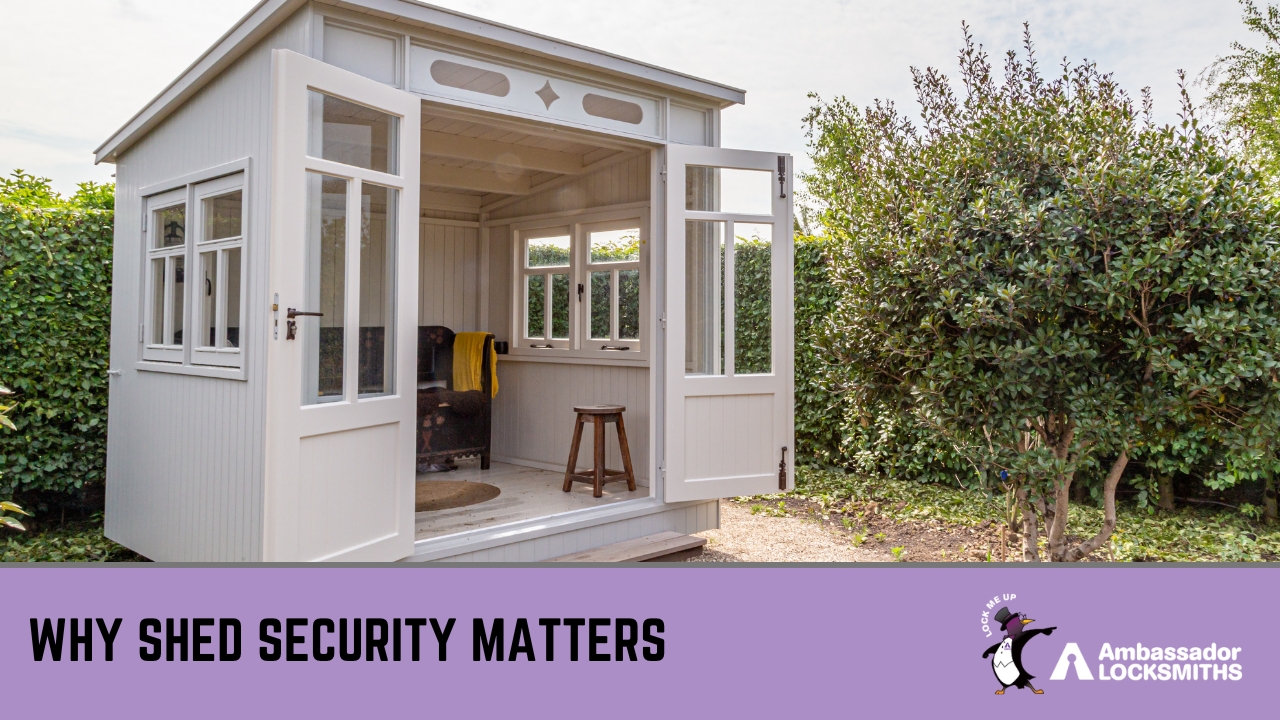
How Do You Make a Shed Secure Against Break-Ins?
Most break-ins occur through weak doors, exposed screws, or corroded fittings. These areas are easy to exploit when locks or hinges have not been maintained. The first step is to replace low-grade padlocks with a closed-shackle design made from hardened steel. This type of lock prevents bolt cutters from reaching the shackle and resists tampering.
Reinforce hinges using hinge bolts or internal fasteners to stop the door from being lifted off. Fit a motion-activated light near the entrance to expose movement at night and discourage intruders. If the shed has windows, use wire mesh or opaque film to hide stored items. Reducing visibility makes it less likely that someone will attempt entry.
Check all fittings at least twice a year. Replace any screws showing rust or movement. When every entry point is tightened and reinforced, a shed becomes far less vulnerable to forced entry or damage.
Top Shed Security Tips
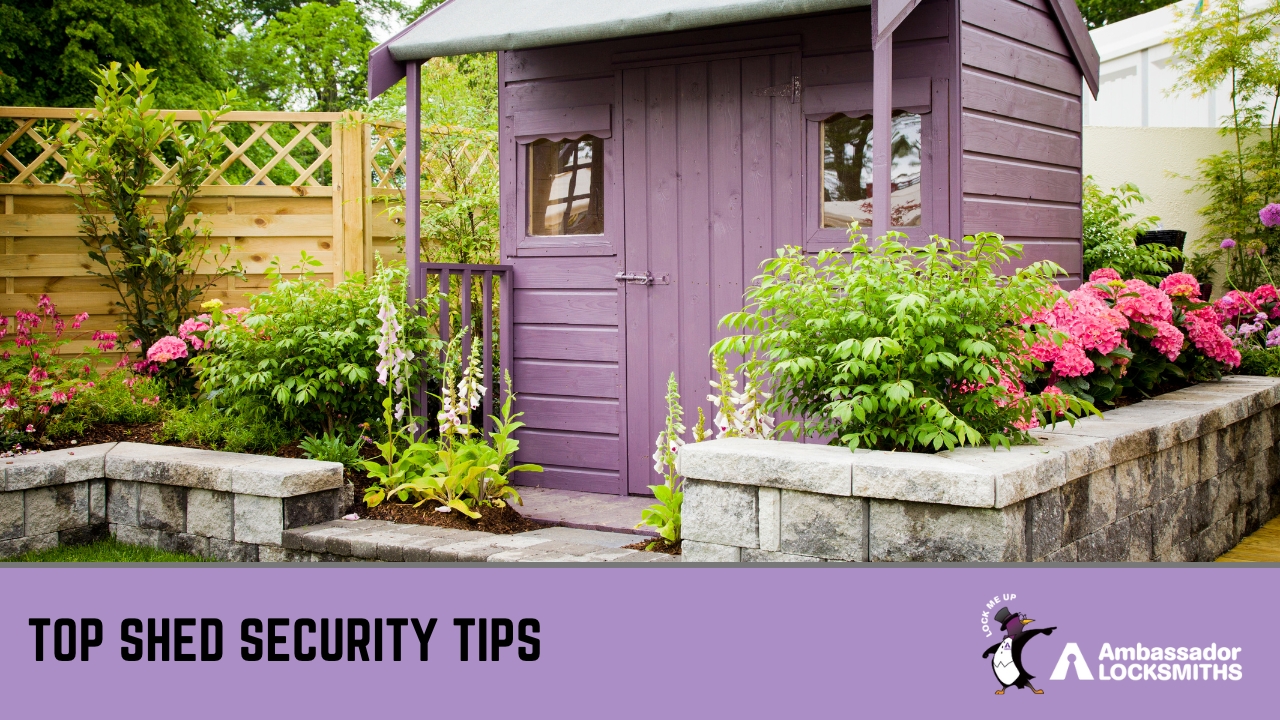
Securing a shed involves combining simple measures that work together to create stronger protection. Replacing weak hardware, improving lighting, and removing easy access points all help prevent theft. Each improvement adds another barrier that slows or discourages entry attempts.
Start by checking all locks, hinges, and latches for looseness. Replace standard screws with tamper-proof ones that cannot be removed using common tools. If the door has a single locking point, install a secondary bolt near the top or bottom to restrict leverage. Remove nearby objects such as bins, ladders, or garden furniture that could be used to climb or pry.
Lighting plays an important role in visibility. Install a motion or solar-powered light above the door to make activity obvious after dark. Keep windows covered to prevent thieves from identifying valuable items inside. Small changes like these make a shed harder to target and easier to protect long-term.
1. Inspect Shed Locks and Hinges Regularly
Regular inspection helps detect early signs of weakness before they lead to security problems. Locks, hinges, and latches wear down from exposure to weather, vibration, and movement. When screws become loose or rusted, thieves can use simple tools to force entry in seconds.
Check all hardware every few months. Make sure the screws are tight and the hinges sit flush with the frame. Replace damaged fittings immediately, using washers or bolts where possible to strengthen the hold. Apply a small amount of lubricant to locks that feel stiff, but never force a key into a mechanism that grinds or sticks—replace it instead.
If the door begins to sag or shift, resecure the hinges to keep alignment tight. Preventing small gaps and movement makes it much harder for someone to insert a crowbar or pry open the frame. Consistent checks and maintenance extend the life of the shed and reduce the chance of break-ins.
2. Keep Valuables Out of Sight
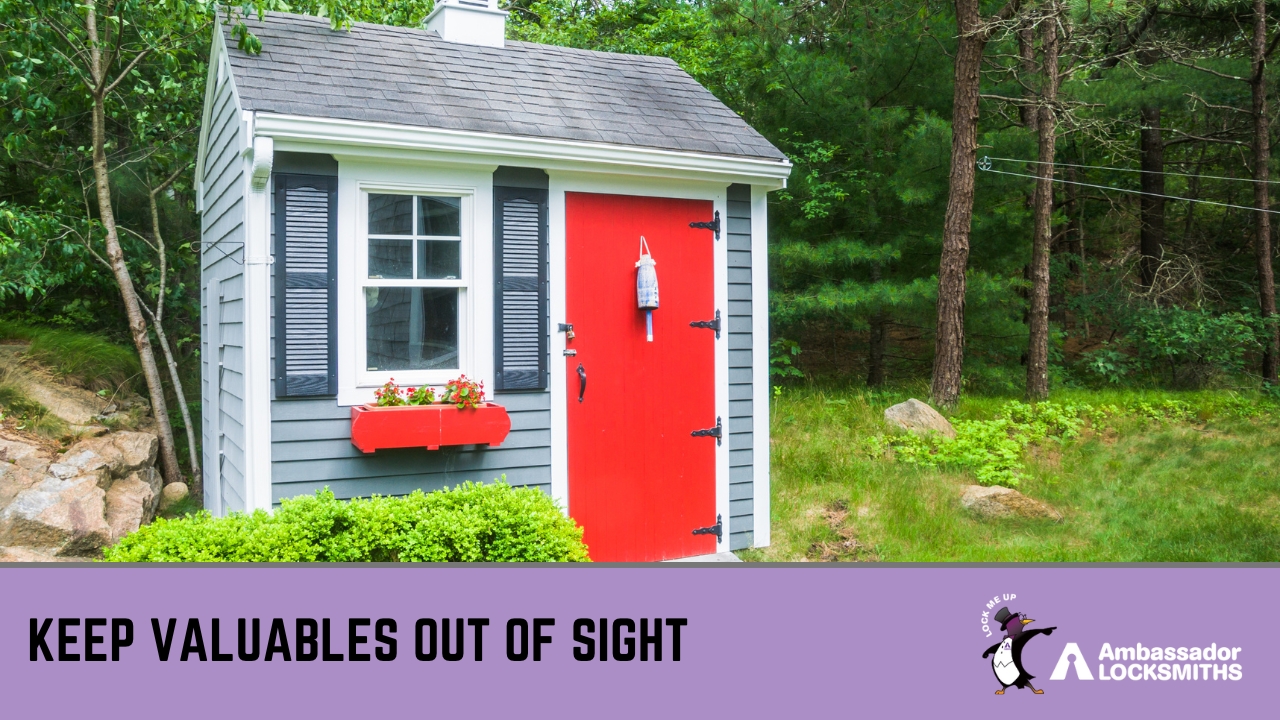
Visibility often determines whether a shed becomes a target. Thieves look for signs of expensive items such as power tools or bicycles through uncovered windows or open doors. Reducing visibility is one of the easiest and most effective ways to improve shed security.
Apply frosted window film or install a simple curtain to block the interior view. For sheds with clear glass, wire mesh or security bars can add both privacy and protection. Store valuable equipment such as drills, blowers, and garden tools toward the back wall, away from any window or doorway.
If the shed door has ventilation gaps or glass panels, cover them with durable material to prevent anyone from seeing inside. Keeping the area organised also helps identify missing items quickly if an attempted theft occurs. Out of sight means out of reach—concealing contents can be as effective as upgrading locks.
3. Install Motion or Solar-Powered Lighting
Good lighting is one of the strongest deterrents against theft. Most break-ins occur in dark areas where intruders can move without being seen. Installing motion or solar-powered lights around the shed removes that cover and makes activity visible to neighbours or security cameras.
Place lights above the door and near paths leading to the shed. Motion sensors should face the main access points to detect movement early. Solar models are ideal for outdoor use because they don’t need wiring or a power connection. For sheds near the house, plug-in floodlights with wide beams offer even stronger coverage.
Light fittings should be mounted high enough to prevent tampering. Clean lenses regularly to keep brightness consistent. Bright light forces intruders to act in full view and significantly lowers the chance of property damage or theft.
4. Use a Closed-Shackle Padlock
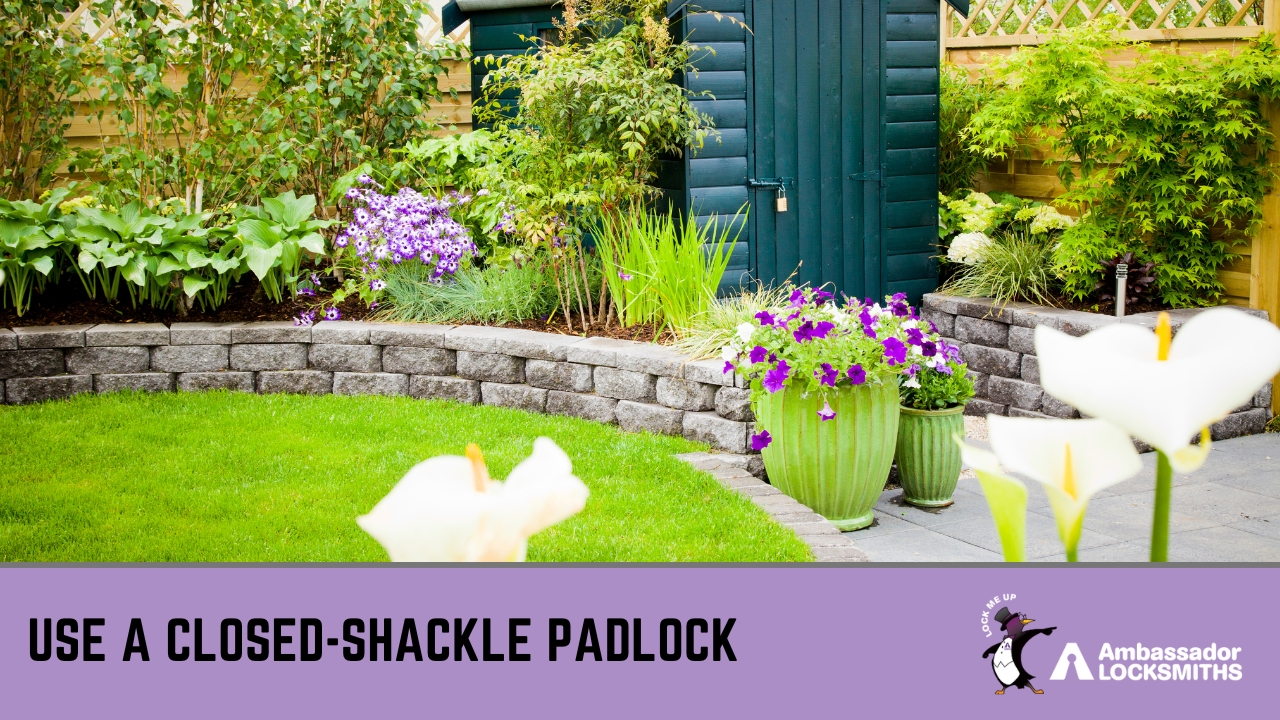
A shed lock is only as strong as its weakest point, and exposed padlock shackles are easy to cut. A closed-shackle padlock provides far better protection because the shackle—the curved part—is mostly covered by the lock body, making it difficult for bolt cutters or saws to reach.
Choose a model made from hardened steel or boron alloy, both of which resist cutting and drilling. The lock should have a weather-resistant coating or rubber seal to stop moisture entering the mechanism. When fitting it, use a hardened steel hasp and staple and ensure both parts align tightly when closed.
Avoid small or lightweight padlocks often sold for indoor use. A high-quality outdoor lock may cost more but can prevent expensive losses. Check the mechanism periodically to make sure it turns smoothly and apply lubricant if needed. A strong padlock serves as the shed’s primary barrier against forced entry.
5. Reinforce Shed Hinges
Hinges are a common weak point because many sheds are fitted with small screws or exposed pins that can be removed with basic tools. Reinforcing them adds an important layer of protection. Use tamper-proof screws or coach bolts that can’t be undone from the outside. These fittings make it difficult for thieves to lift or detach the door.
If the hinges are surface-mounted, add hinge bolts or security studs on the inside. These prevent the door from being pulled free even if the hinge plates are removed. For wooden sheds, ensure the frame behind each hinge is solid and not splitting. Weak timber can make even strong hinges ineffective.
Check alignment after reinforcement. The door should close smoothly without binding, as pressure or misalignment can loosen the fittings again over time. Strong, reinforced hinges turn one of the shed’s weakest spots into one of its most reliable defences.
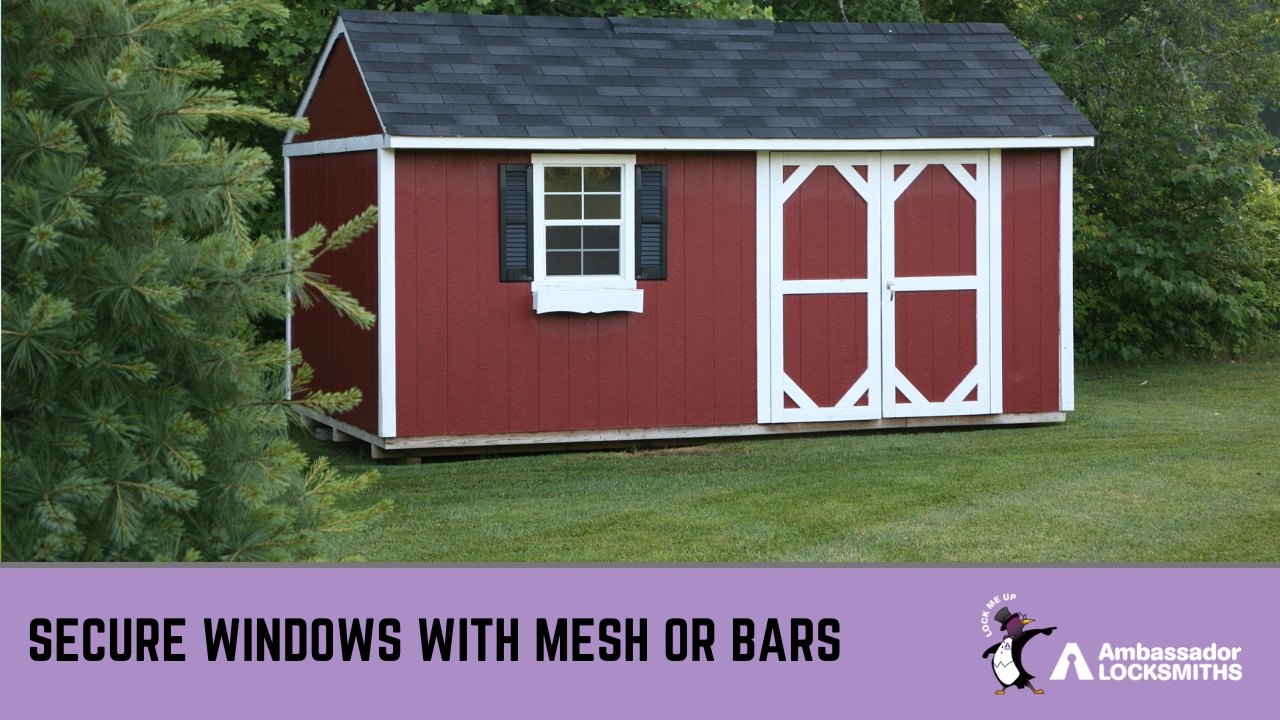
6. Secure Windows with Mesh or Bars
Windows are a frequent point of entry because they are often left unprotected or fitted with thin glass that can be broken quickly. Securing them with wire mesh, steel bars, or a security grille helps block access without sacrificing ventilation. These fittings make it difficult for anyone to reach through or climb in, even if the glass is damaged.
Choose a galvanised or powder-coated mesh that resists corrosion. Cut it to size and screw or bolt it directly to the frame using tamper-proof fittings. If you prefer a less visible option, apply opaque or frosted film to hide the shed’s contents. Reducing visibility is as important as reinforcing the glass itself.
Check the frame and sealant regularly for cracks or moisture damage, as loose panels can weaken over time. A secured and well-maintained window limits opportunities for entry and supports the overall strength of the shed’s structure.
7. Add a Simple Alarm System
An alarm provides immediate detection and response during an attempted break-in. Compact battery-powered alarms are available for sheds and do not need wiring. Most include a magnetic contact that triggers a loud siren when the door or window opens. This sound startles intruders and alerts nearby residents.
Choose an alarm with at least a 100-decibel output for outdoor use. Some models come with remote controls or mobile alerts through Wi-Fi. Mount the main unit inside the shed and position the sensor on the door frame where it cannot be reached from outside.
Check the batteries every few months and test the siren to confirm it still activates correctly. Even a basic alarm can prevent theft because thieves avoid noisy situations. It is a low-cost upgrade that adds a strong layer of protection to any shed.
8. Replace Old or Rusty Locks
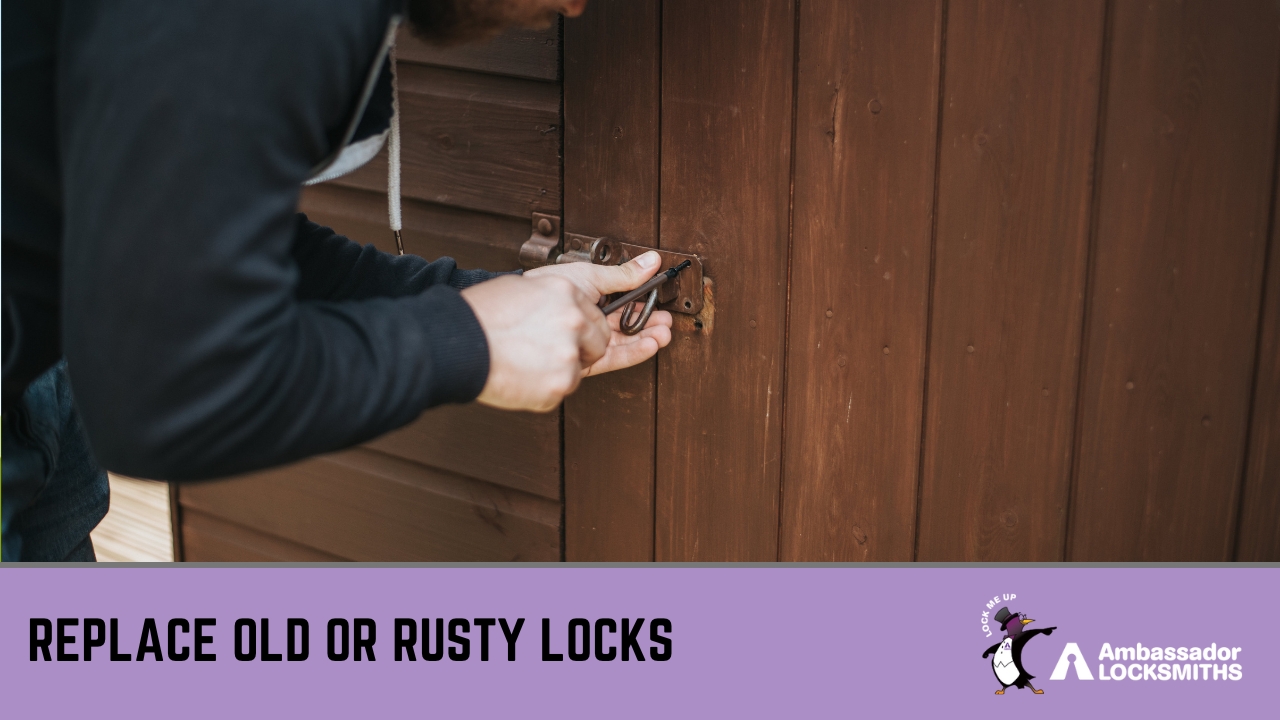
Locks exposed to rain, dust, and temperature changes wear out over time. Rusted parts weaken metal strength and cause jamming, making the shed easier to force open. Replacing worn or corroded locks is an essential part of maintaining proper shed security.
Select locks made from stainless steel or solid brass, as both resist corrosion and provide reliable performance outdoors. When fitting a new lock, inspect the hasp and staple for damage and replace them if the metal is thin or bent. Tighten all screws and make sure the lock fits snugly to the door with no gap for leverage.
Lubricate the mechanism once or twice a year to prevent stiffness. Avoid forcing keys through resistance, as this can break internal pins. A new, well-maintained lock performs better than one that has been exposed to years of weather and keeps the shed secured against break-ins.
9. Add a Secondary Door Bolt
A single lock is often not enough to resist force. Installing a secondary door bolt strengthens the door and reduces movement under pressure. Bolts can be fitted at the top or bottom of the door to secure it on two points, making it harder to pry open.
Choose a steel sliding bolt or barrel bolt with a locking hole that accepts a padlock. For timber doors, mount the bolt into solid framing rather than thin panel boards. Ensure it slides smoothly and that the latch hole is tight enough to prevent vibration or accidental unlocking.
A bolt placed near the base of the door limits leverage from crowbars or tools. Combined with a high-quality padlock, it adds significant resistance against forced entry. Regularly check that both the bolt and screws remain tight, as movement over time can loosen the fittings.
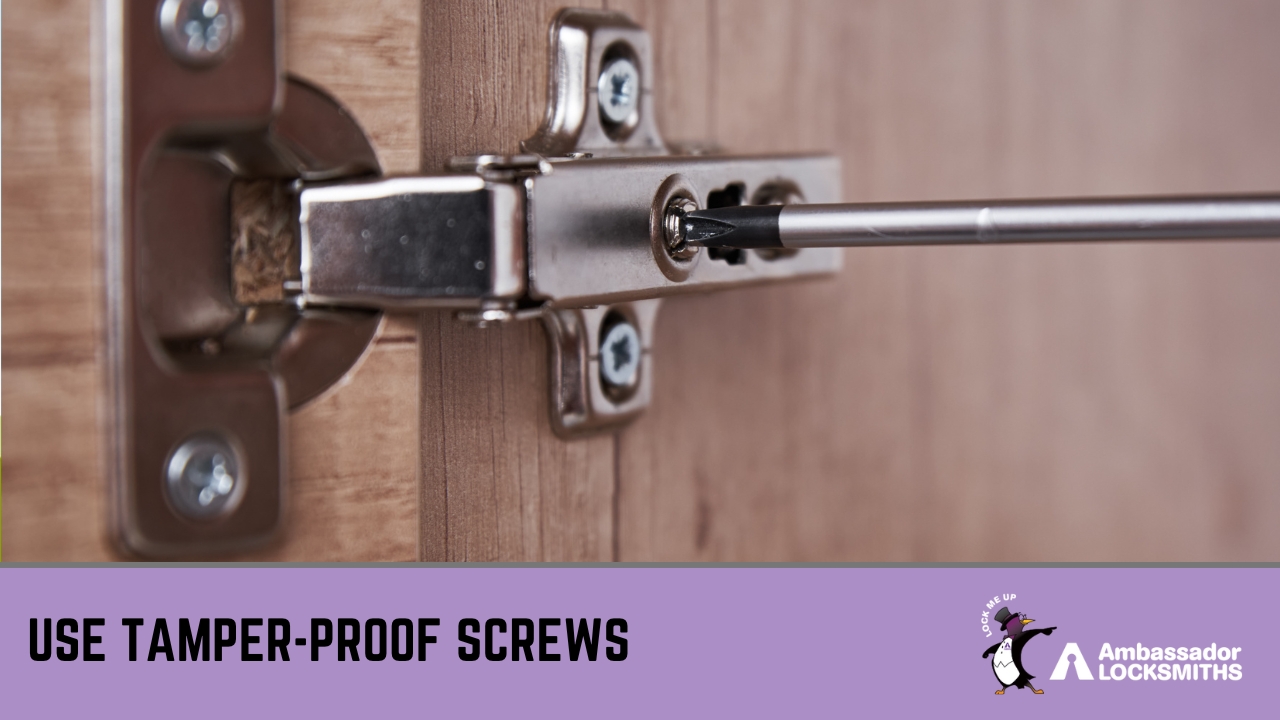
10. Use Tamper-Proof Screws
Ordinary screws can be removed using basic tools, leaving hinges and locks exposed. Replacing them with tamper-proof screws prevents easy removal and strengthens overall shed security. These screws have unique heads that require special tools to undo, making them difficult for intruders to remove.
Use tamper-proof fittings on hinges, hasps, brackets, and padlock plates. For areas where bolts are suitable, choose coach bolts secured with nuts on the inside. When installing, make sure the screws sit flush with the metal surface so tools cannot grip them.
Inspect these fittings periodically. Over time, vibration or wood movement can loosen hardware. Tighten any screws that start to shift, especially after strong winds or temperature changes. This small upgrade significantly increases resistance to tampering and forced entry.
11. Keep Ladders and Bins Away from the Shed
Objects placed near a shed can make it easier for thieves to climb or gain leverage to force entry. Ladders, wheelie bins, or garden furniture can be used as platforms to reach windows or roofs. Keeping the area around the shed clear reduces these opportunities.
Store ladders in a locked garage, or secure them to a wall using a chain and padlock. Move bins, barrels, or stacked timber away from the walls and entry points. A clear perimeter also improves visibility for motion sensors or lights, ensuring nothing blocks their detection range.
Trimming overgrown bushes and branches near the shed prevents concealment and makes it harder for someone to hide while attempting to break in. Maintaining a clear and open space removes any advantage an intruder might use and helps your lighting and security measures work more effectively.
12. Add Gravel or Noise Surfaces Around Entry
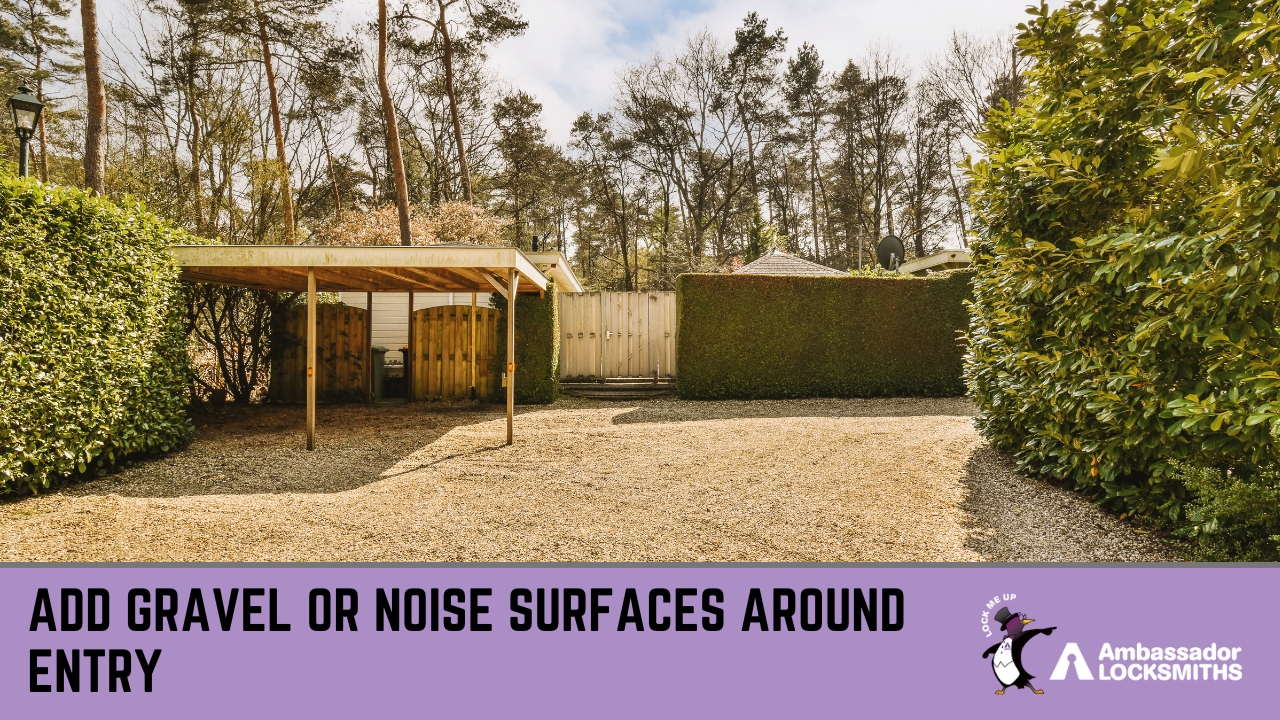
Noise is one of the most effective deterrents for intruders. A simple way to create it is by placing gravel, crushed stone, or pebbles around the shed’s entry and access paths. These materials make a distinct sound when stepped on, alerting you or neighbours to movement at night.
Spread a layer about five centimetres deep across the main walkway and around the perimeter. This depth is enough to create sound without affecting drainage. Combine it with motion-activated lighting so any movement produces both noise and visibility.
Gravel paths also improve water runoff, helping reduce mud and rot around the shed base. Over time, refill areas that become compacted to maintain the noise level. A basic surface change like this adds an extra layer of warning and strengthens other security features already in place.
13. Choose Locks Made from Brass or Stainless Steel
Outdoor locks must withstand rain, humidity, and temperature changes without weakening. Brass and stainless steel are the most reliable materials for this purpose. They resist corrosion, prevent seizing, and maintain strength over long periods of outdoor exposure.
Brass locks are ideal for coastal or humid locations because they do not rust easily. Stainless steel locks provide higher strength and are better suited for high-security applications. When selecting one, check the manufacturer’s weather rating and look for rubber seals or covers that protect the keyway from moisture.
Avoid painted or plated locks that can chip and corrode quickly. A strong lock body, a hardened steel shackle, and a well-fitted hasp are all necessary to keep the mechanism secure. Choosing the right materials helps prevent failure caused by weather and extends the lifespan of the entire locking system.
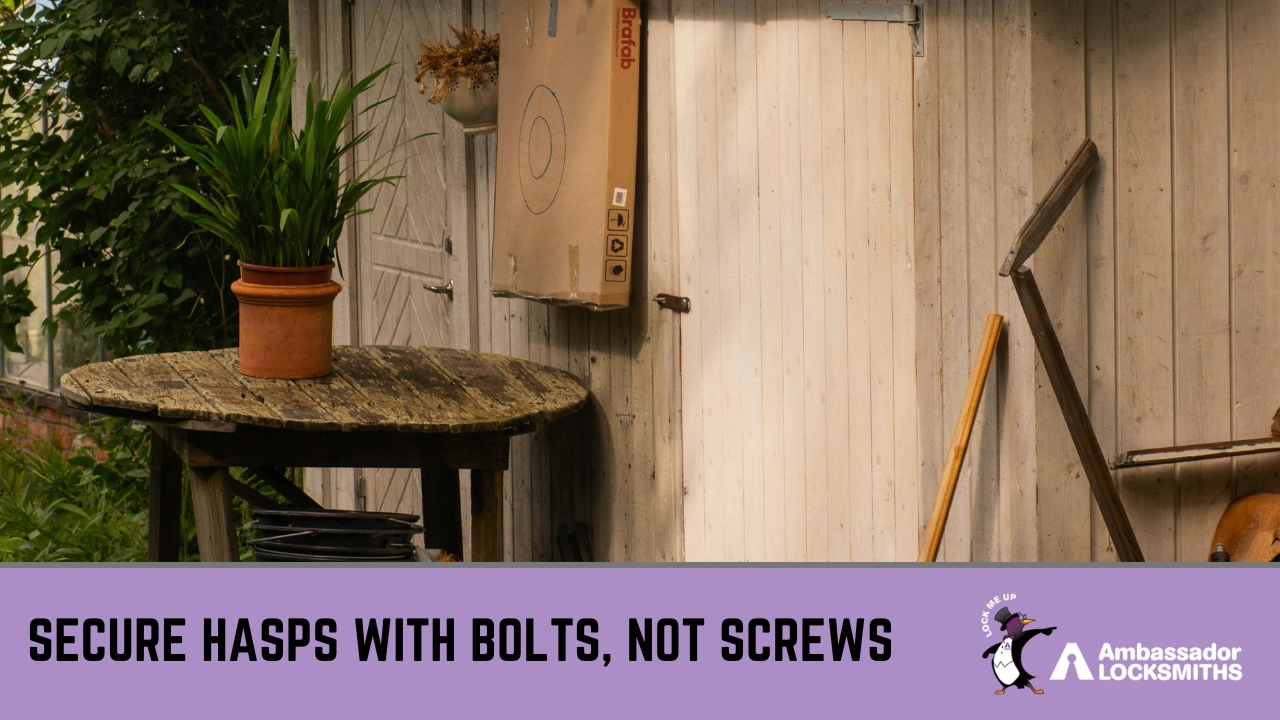
14. Secure Hasps with Bolts, Not Screws
Hasps and staples hold the padlock in place, and if they are attached with ordinary screws, they can be removed quickly. Using bolts with nuts and washers provides stronger fixing and prevents access from the outside. Bolts distribute pressure more evenly and resist pulling or twisting better than standard screws.
Drill through the door or frame and fit the bolts so that the nuts sit on the inside. Tighten them firmly and check that the hasp and staple align perfectly when locked. If the shed walls are thin, add a small metal plate or backing washer behind each nut to spread the load and stop movement.
Avoid exposed screw heads near the locking point, as they make forced removal easier. A hasp secured with bolts creates a stronger connection and makes it far more difficult for thieves to detach the lock or pry open the fitting.
15. Keep the Lock Flush Against the Frame
A lock that sits away from the door or frame leaves space for prying tools. Keeping it flush removes that leverage point and strengthens the entire locking system. When fitting a padlock or deadlock, ensure the hardware closes tightly and there are no visible gaps once locked.
Use a hardened steel hasp and staple that matches the lock’s width. The hasp should overlap the door seam completely and lie flat without movement. If the door or frame is uneven, add a thin metal plate behind the fitting to create a level surface. This ensures the lock engages securely and can’t be twisted or forced open.
Check the alignment after installation. The lock should open and close smoothly without binding. A properly seated lock not only improves protection but also reduces wear on the mechanism caused by constant friction or strain.
16. Add Locking Brackets for Extra Reinforcement
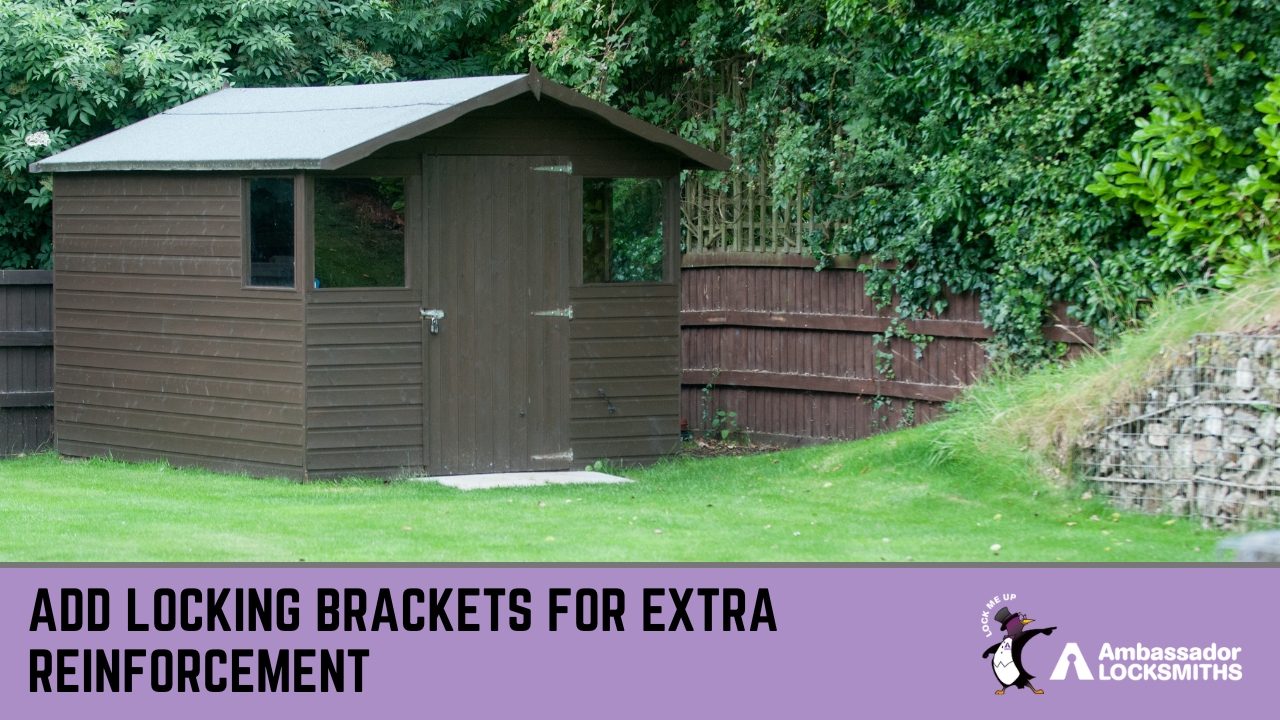
Locking brackets strengthen the connection between the lock and the door, reducing the chance of forced entry. They enclose the padlock in a hardened metal guard, which limits access to cutting tools. These brackets are especially useful for sheds that store expensive tools, machinery, or outdoor equipment.
Choose steel or alloy brackets designed for exterior use. Fit them over the existing hasp and staple using tamper-proof screws or bolts. Make sure the lock body sits fully within the bracket opening without friction, allowing smooth locking and unlocking.
If the shed has double doors, install brackets on both sides for balanced strength. Inspect them regularly for rust or loose fittings. A locking bracket provides strong resistance to cutting, pulling, or twisting, and helps keep the padlock secure under heavy force.
17. Label and Engrave Valuable Tools
Labelling tools makes stolen items easier to trace and reduces their resale value for thieves. Mark each high-value item with an identifiable label, engraving, or UV pen. Engraving a name or postcode directly onto the metal or plastic casing provides a permanent identifier that cannot be removed easily.
For small equipment, use asset tags or durable stickers with contact details. Apply them on flat, visible surfaces rather than hidden areas. Keep a written record or digital list of serial numbers and marks for insurance purposes.
If you use UV pens, reapply markings every few years as they fade under sunlight. Labelling does not physically stop theft, but it discourages resale and helps authorities recover stolen property more efficiently. Combined with strong locks and alarms, it strengthens overall shed security and protection of stored equipment.
18. Maintain Paint and Panels
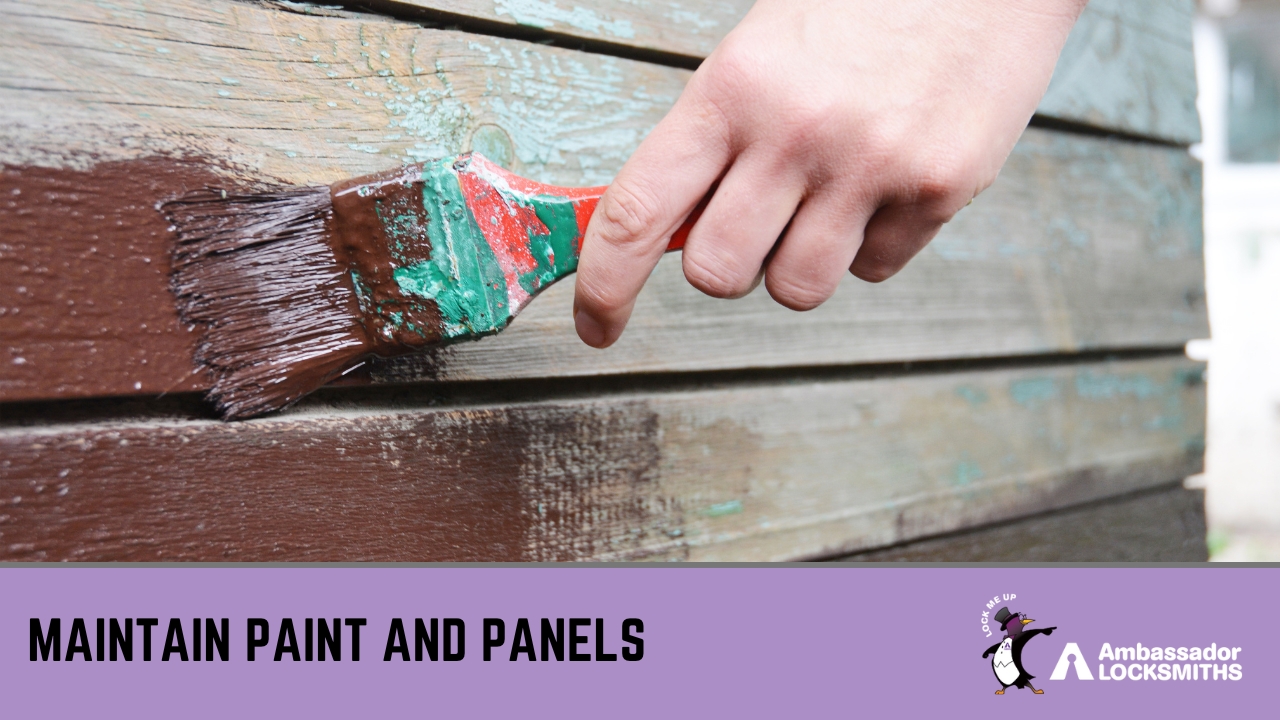
Weather damage weakens a shed’s structure and creates points where thieves can force entry. Repainting and maintaining panels protect against moisture, rust, and wood decay. Regular upkeep keeps the shed solid and prevents screws or bolts from loosening due to shifting materials.
For timber sheds, apply exterior-grade paint or sealant every few years to stop water absorption. Check for cracks, soft spots, or gaps where panels meet. Replace rotted timber or warped sheets as soon as they appear. For metal sheds, remove rust with sandpaper or a wire brush before painting with anti-corrosion coating.
Clean the surfaces before painting to ensure proper adhesion. Reattach any loose trims or supports that separate from the frame. A well-maintained structure resists prying, reduces vibration on hinges, and prolongs the life of all fittings and locks.
19. Clean and Lubricate Locks
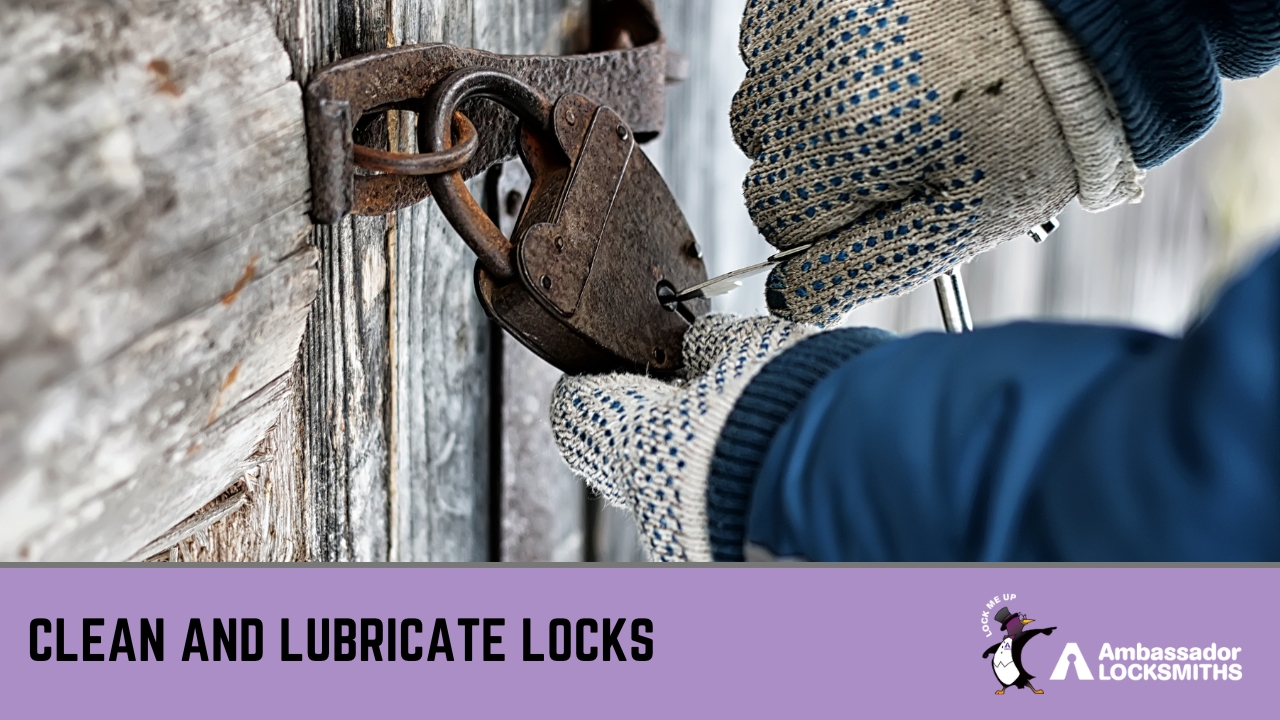
Outdoor locks are exposed to dust, rain, and temperature changes that can cause stiffness and corrosion. Regular cleaning and lubrication keep them working smoothly and reduce the chance of failure during use. A seized lock is easier to break and may prevent the key from turning properly.
Clean the keyhole and shackle area with a dry cloth or small brush to remove dirt and debris. Apply a graphite-based or silicone lubricant instead of oil, as oil attracts dust and can thicken over time. Insert the key and turn it several times to spread the lubricant evenly inside the mechanism.
Avoid using household grease or WD-40 as a long-term solution, since these can trap moisture. Test the lock after cleaning to ensure it opens and closes freely. A well-maintained lock functions reliably and maintains full resistance against cutting and tampering.
20. Review Shed Security Each Season
Seasonal changes affect how a shed performs and how secure it remains. Temperature shifts, rain, and wind can loosen fittings, cause wood to expand, or lead to rust on locks and hinges. Reviewing security every season ensures these problems are found before they create weak points.
Inspect all locks, bolts, and brackets for movement or corrosion. Tighten any fittings that have loosened and replace damaged screws immediately. Test motion lights and alarms to confirm they still work and replace batteries if needed. Clear away leaves or debris that may block lighting or camera sensors.
After heavy rain or storms, check for leaks or swelling around doors and frames. Proper adjustment prevents gaps that make locks ineffective. A routine inspection four times a year keeps the shed strong, prevents gradual damage, and maintains consistent protection against break-ins.
Frequently Asked Questions
What makes a shed more secure against forced entry?
A shed becomes more secure when multiple layers of protection are used together. Combining strong locks, bolts, reinforced hinges, and lighting reduces access points and visibility for intruders. Each measure supports the others to create consistent resistance to break-ins.
Is it worth installing a camera for a small shed?
Yes. A small wireless camera provides evidence if a theft occurs and acts as a visible deterrent. Even basic models with motion recording can alert homeowners to activity around the shed.
Can weather affect how secure a shed is?
Yes. Rain, wind, and humidity weaken metal fittings and wooden panels over time. Regular checks after harsh weather help identify rust, swelling, or loose fasteners that reduce structural strength.
What type of alarm works best for outdoor storage?
Battery-powered or solar alarms with motion sensors are best for sheds. They work independently from house power and provide an audible warning when the door opens unexpectedly.
How often should shed security be upgraded?
Every few years or when fittings show signs of wear. Lock technology improves regularly, and updating hardware ensures continued protection against modern tools and methods used by thieves.
Secure Your Shed with Professional Help
Strong locks and well-maintained fittings are essential for keeping a shed protected. When locks or hinges weaken, the structure becomes easier to force open. Our locksmiths can install high-security padlocks, add locking brackets, and reinforce doors or hinges to strengthen vulnerable points and reduce the risk of break-ins.
We use durable, weather-resistant hardware designed for outdoor conditions in Australia. Each lock is fitted to provide long-term strength and protection against tampering or corrosion. By upgrading fittings and using quality materials, your shed remains secure against cutting, prying, and impact. At Ambassador Locksmiths, we help homeowners protect sheds, garages, and outdoor storage spaces with reliable security solutions. Our team supplies and installs products that improve safety and extend the life of locks exposed to the elements. A well-secured shed keeps tools and equipment safe throughout the year.